By Martin Burns
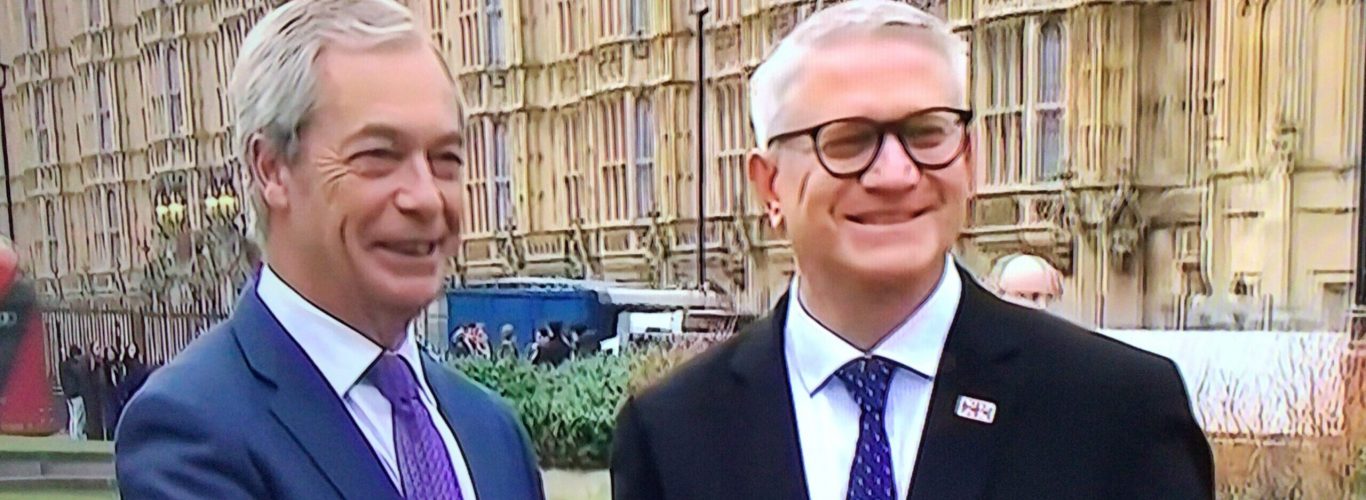
History is full of ironies and events that do not always play out in the way you think. The surge of support for Reform UK and Nigel Farage in the United Kingdom is changing the terms of the debate over an Irish border poll.
In the past, the question for the people of Northern Ireland was: Do you want to leave the United Kingdom and join the Irish Republic? Now the question is: do you want to leave the United Kingdom with all its chaotic politics, represented by the rise of Nigel Farage and Reform UK (the same folks who brought you Brexit), and join the Irish Republic and thus be part of the European Union (EU).
A big part of this discussion will be that the economy in the Irish Republic is performing far better than in Northern Ireland. Last November the Irish Times reported that:
“The Republic of Ireland has higher wages, stronger economic growth, and better living standards than Northern Ireland, according to a new study by the Economic and Social Research Institute. The report was commissioned by the Shared Island Unit in the Department of the Taoiseach. It found the population of the Republic was growing faster than in Northern Ireland, largely driven by stronger net migration in recent years. The report said household disposable income in the south was 18.3% higher than it was in the north and the gap had widened over time. It also said wages were higher in the Republic with hourly earnings 36% above those in Northern Ireland”.
There have been many attempts in the last week to explain away the fact that we know have first ministers in Northern Ireland, Scotland and Wales who support independence from Great Britain. These people are clearly ignoring the results of last week’s elections. Voters in three out of the four nations in the United Kingdom are clearly not happy with the political status quo and the current state of the union. Denying the impact of the recent Scottish and Welsh elections only makes things worse for the state of the union. Instead of addressing the concerns voters expressed in the elections, the unionists are simply denying that the problem exists. In a very odd twist of fate, those sticking their heads in the sand about the results will only make the nationalists in Northern Ireland, Scotland and Wales look more reasonable thus intensify the forces breaking up the United Kingdom.
Scotland and Wales have no clear route to independence. The Westminster parliament controls their ability to choose to remain in or leave the United Kingdom. Northern Ireland has another path forward. Under the terms of the Belfast/Good Friday Agreement, Northern Ireland has a clear road to independence/reunification with the Irish Republic. As Professor John Tong put it in his Submission to the Constitution Unit Working Group on Unification Referendums on the Island of Ireland:
“The Northern Ireland Act 1998, which gave effect to the Good Friday Agreement, states that a poll will be called by the Secretary of State for Northern Ireland “if at any time it appears likely to him that a majority of those voting would express a wish that Northern Ireland should cease to be part of the UK and form part of a united Ireland”.
Right now, the unionists are arguing that the union is as strong as ever. They have every right to make this argument. That is what democracy is all about. The establishment may be able to frustrate the Scotch and Welsh parliaments. However, with regards to Northern Ireland they have a clear international obligation as expressed in the Good Friday/Belfast Agreement to allow for a referendum. At a bare minimum, the British Government must as soon as possible indicate what would be the criteria for holding a border poll. We are more than a quarter century on from the ratification of the Good Friday/Belfast Agreement. The events of recent days indicate that the winds of change are blowing from Belfast to Edinburgh to Cardiff. It is well past time for the British Government to clearly set out what criteria it will use to determine to call a border poll.

By Martin Burns
History is full of ironies and events that do not always play out in the way you think. The surge of support for Reform UK and Nigel Farage in the United Kingdom is changing the terms of the debate over an Irish border poll.
In the past, the question for the people of Northern Ireland was: Do you want to leave the United Kingdom and join the Irish Republic? Now the question is: do you want to leave the United Kingdom with all its chaotic politics, represented by the rise of Nigel Farage and Reform UK (the same folks who brought you Brexit), and join the Irish Republic and thus be part of the European Union (EU).
A big part of this discussion will be that the economy in the Irish Republic is performing far better than in Northern Ireland. Last November the Irish Times reported that:
“The Republic of Ireland has higher wages, stronger economic growth, and better living standards than Northern Ireland, according to a new study by the Economic and Social Research Institute. The report was commissioned by the Shared Island Unit in the Department of the Taoiseach. It found the population of the Republic was growing faster than in Northern Ireland, largely driven by stronger net migration in recent years. The report said household disposable income in the south was 18.3% higher than it was in the north and the gap had widened over time. It also said wages were higher in the Republic with hourly earnings 36% above those in Northern Ireland”.
There have been many attempts in the last week to explain away the fact that we know have first ministers in Northern Ireland, Scotland and Wales who support independence from Great Britain. These people are clearly ignoring the results of last week’s elections. Voters in three out of the four nations in the United Kingdom are clearly not happy with the political status quo and the current state of the union. Denying the impact of the recent Scottish and Welsh elections only makes things worse for the state of the union. Instead of addressing the concerns voters expressed in the elections, the unionists are simply denying that the problem exists. In a very odd twist of fate, those sticking their heads in the sand about the results will only make the nationalists in Northern Ireland, Scotland and Wales look more reasonable thus intensify the forces breaking up the United Kingdom.
Scotland and Wales have no clear route to independence. The Westminster parliament controls their ability to choose to remain in or leave the United Kingdom. Northern Ireland has another path forward. Under the terms of the Belfast/Good Friday Agreement, Northern Ireland has a clear road to independence/reunification with the Irish Republic. As Professor John Tong put it in his Submission to the Constitution Unit Working Group on Unification Referendums on the Island of Ireland:
“The Northern Ireland Act 1998, which gave effect to the Good Friday Agreement, states that a poll will be called by the Secretary of State for Northern Ireland “if at any time it appears likely to him that a majority of those voting would express a wish that Northern Ireland should cease to be part of the UK and form part of a united Ireland”.
Right now, the unionists are arguing that the union is as strong as ever. They have every right to make this argument. That is what democracy is all about. The establishment may be able to frustrate the Scotch and Welsh parliaments. However, with regards to Northern Ireland they have a clear international obligation as expressed in the Good Friday/Belfast Agreement to allow for a referendum. At a bare minimum, the British Government must as soon as possible indicate what would be the criteria for holding a border poll. We are more than a quarter century on from the ratification of the Good Friday/Belfast Agreement. The events of recent days indicate that the winds of change are blowing from Belfast to Edinburgh to Cardiff. It is well past time for the British Government to clearly set out what criteria it will use to determine to call a border poll.