The Irish Unity debate has moved from the margins to the mainstream since FG launched their blueprint for Irish Unity. As the Dublin government begins the process of planning and preparing, Ray Bassett proposes interim measures that can be taken to help unite the country immediately before any major political changes.
Former Taoiseach, Leo Varadkar, made the surprising claim that many Southerners view Northerners as foreigners. I live close to where Leo grew up and where he had his political base, and I never heard anybody use that description. I asked a number of people in this locality, and none agreed with Leo’s statement. I also have family north of the border, so I admit the claim irked me.
However, it has to be conceded that when the British Government partitioned Ireland, through the Government of Ireland Act of 1920, it ruptured the country and brought about North/South divisions which still resonate today, though nothing like to the extent of Leo’s headline capturing claim.
With the prospect of the ending of that national division becoming more feasible, are there any interim measures which can be taken which would help unite the country, before any major political changes. The Shared Island Initiative, although no substitute for political action on the issue of unity, moves positively along the same lines.
Good Friday Agreement (GFA)
The GFA states
“the birthright of all the people of Northern Ireland to identify themselves as Irish or British, or both, as they may choose, and accordingly confirm that their right to hold both British and Irish citizenship is accepted by both Governments.”
It goes on to commit the Governments and the NI political parties to “parity of esteem and of just and equal treatment for the identity, ethos, and aspirations of both communities.”
In plain English, this should mean that Irish citizens in the North are entitled to live their lives fully as part of the Irish nation.
This commitment was strengthened by the inclusion of a new Constitutional underpinning in Article 2 of Bunreacht na hÉireann, of the right of people in the North to Irish citizenship, on the same basis as those in the Republic.
This new article was also used to extent programmes like the youth award scheme, Gaisce, the Irish Presidential awards, to the North on the same basis as the Duke of Edinburgh Awards.
However, much still needs to be done to counter the long term effects of the partitionist mentality which seems to operate in Leo’s social circle.
End the use of the term Ireland/Northern Ireland
The exclusive use of Ireland for the 26 counties, even when speaking in an all-island context, has crept into the political language. When I was in the Department of Foreign Affairs, we would neveraccept that terminology and would correct any other Irish Government agency using it. Unfortunately, our successors seem much less aware of how irritating the term is to all those living north of the border. The current Irish Government should revert back to the old position of deeming its use as unacceptable.
A blank on a map of Ireland over the North
We often see the entire North, either excluded from a map of Ireland or else left blank. This is particularly galling when it occurs on the State broadcaster, RTE, although the position has improved in recent years. The Government should quietly point out any such omission is contrary to the Good Friday Agreement and to the right of all Irish citizens on the island to be part of the Irish nation.
Belfast to Cork train service
This is a particular hobby- horse of mine. During the preparations for the EU Peace Programme in 1995, the Irish Government undertook a number of surveys of attitudes. One of the most shocking findings was the extremely low level of people, resident in Munster, who had actually been to Northern Ireland. If I recall it correctly it was under 10% and was much lower than similar returns for people from Leinster, Connacht or the Republic part of Ulster.
While I have no doubt it has risen in the meantime, one of the problems in greater cross border travel is the lack of a direct rail link to our southern Province. At present, this is only achievable through a cross Dublin journey by a separate light rail link to a new railway station.
There is a need to have direct Belfast to Cork rail services which would pass through Dublin. There is a rail link between Connelly Station and Hueston. Dublin suburban services use it every day. A small number of Enterprise services could continue onto Cork, with Limerick, linked through Limerick Junction, with the service. These three large urban Irish conurbations would benefit from such a service. The air link between Belfast and Cork did not prove commercially viable.
Passport Office in the North
After the Good Friday Agreement, Irish passports became available through the Royal Mail in the North (as outlined in my book, The Travellers Tale). This was viewed as an interim measure, pending the opening of an Irish Passport office. With more Irish passports being issued in the North than British, there is now a very strong case to give Irish citizens the benefit of a passport office on the ground. It would also be a powerful symbol of the Irish State’s commitment to its citizens in the North.
RTE and the North
The State broadcaster should be required to operate on an all island basis. In the past, there were difficulties in getting the signal into parts of the North. (I spent many years on the issue). With the gradual demise of terrestrial broadcasting, that difficulty has largely vanished. RTE should end its practice of blanking out many of its programmes in the North, especially soccer internationals. Of course this will have some financial implications, but since the Government pays for RTE, it should insist on it acting in the full national interest.
Improved road and rail links with Derry from Dublin
Travelling from Dublin to Derry is a nightmare. Although work is now in hand to improve the notorious A5, there is no direct rail link with the North’s second city. The Irish Government should consider partly funding a restored rail link between Newry and Derry, with onward connection to Dublin. The tracks were ripped up under the old Stormont regime.
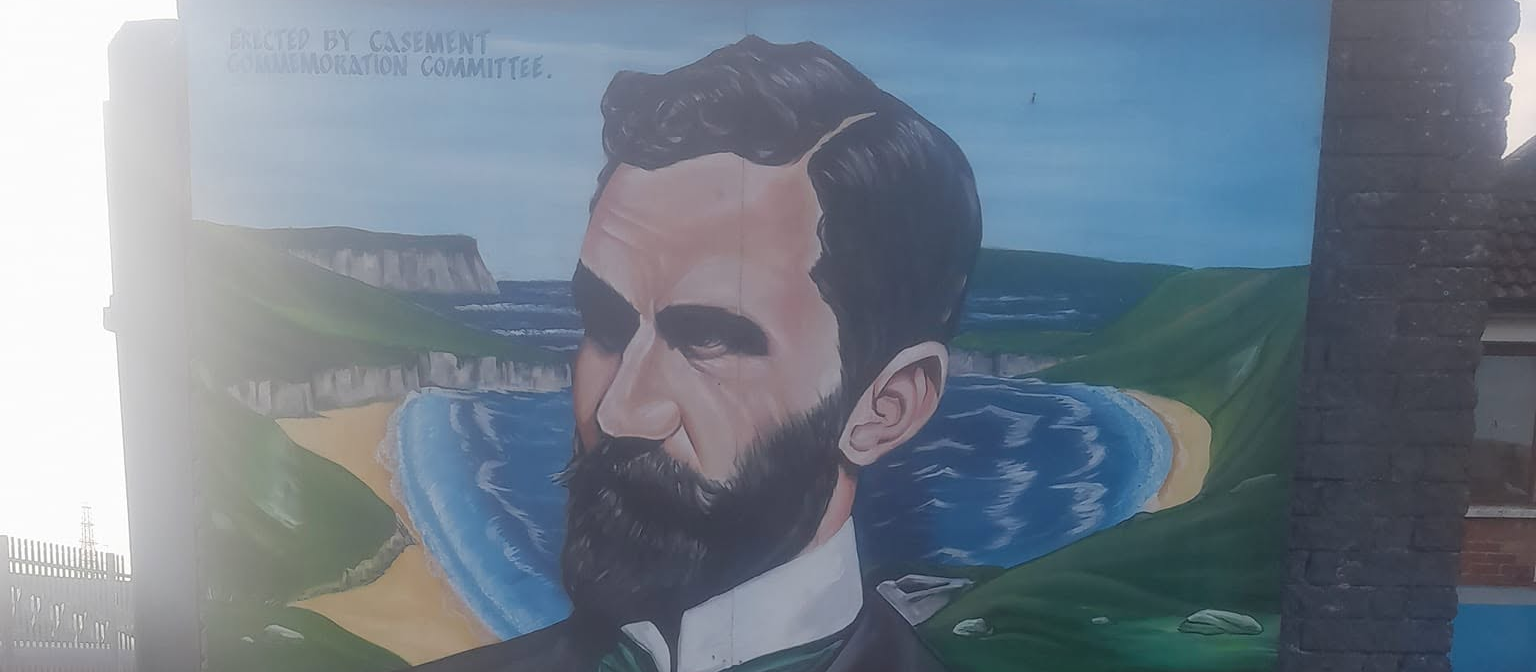
Casement Park
It is a shame that Belfast has no major sports arena to hold significant sporting and cultural events that a city of its size would normally attract. This Irish Government should consider using the Irish State Investment fund to build a 50,000 + seater in West Belfast, close to the M1 motorway. The stadium organisation could pay the Irish State back at a very low rate of interest over a long period.
A new stadium (maybe also called Casement) would be a strong catalyst of economic regeneration in the area. By putting the money into this development, Dublin would show its commitment to the welfare of Irish citizens in that part of Belfast. It could be the home grounds of a future All Ireland soccer team.
Civil Society
The Irish State should encourage all NGOs, including social groups and sporting organisations, to operate on a 32 county basis and reward those who do so by selective measures as in grant allocation. Those who confine themselves to the 26 counties are violating the Good Friday Agreement and hence are opposing State policy.
These are just a few of the interim measures which could be taken to counter Leo’s assertion.
The Irish Unity debate has moved from the margins to the mainstream since FG launched their blueprint for Irish Unity. As the Dublin government begins the process of planning and preparing, Ray Bassett proposes interim measures that can be taken to help unite the country immediately before any major political changes.
Former Taoiseach, Leo Varadkar, made the surprising claim that many Southerners view Northerners as foreigners. I live close to where Leo grew up and where he had his political base, and I never heard anybody use that description. I asked a number of people in this locality, and none agreed with Leo’s statement. I also have family north of the border, so I admit the claim irked me.
However, it has to be conceded that when the British Government partitioned Ireland, through the Government of Ireland Act of 1920, it ruptured the country and brought about North/South divisions which still resonate today, though nothing like to the extent of Leo’s headline capturing claim.
With the prospect of the ending of that national division becoming more feasible, are there any interim measures which can be taken which would help unite the country, before any major political changes. The Shared Island Initiative, although no substitute for political action on the issue of unity, moves positively along the same lines.
Good Friday Agreement (GFA)
The GFA states
“the birthright of all the people of Northern Ireland to identify themselves as Irish or British, or both, as they may choose, and accordingly confirm that their right to hold both British and Irish citizenship is accepted by both Governments.”
It goes on to commit the Governments and the NI political parties to “parity of esteem and of just and equal treatment for the identity, ethos, and aspirations of both communities.”
In plain English, this should mean that Irish citizens in the North are entitled to live their lives fully as part of the Irish nation.
This commitment was strengthened by the inclusion of a new Constitutional underpinning in Article 2 of Bunreacht na hÉireann, of the right of people in the North to Irish citizenship, on the same basis as those in the Republic.
This new article was also used to extent programmes like the youth award scheme, Gaisce, the Irish Presidential awards, to the North on the same basis as the Duke of Edinburgh Awards.
However, much still needs to be done to counter the long term effects of the partitionist mentality which seems to operate in Leo’s social circle.
End the use of the term Ireland/Northern Ireland
The exclusive use of Ireland for the 26 counties, even when speaking in an all-island context, has crept into the political language. When I was in the Department of Foreign Affairs, we would neveraccept that terminology and would correct any other Irish Government agency using it. Unfortunately, our successors seem much less aware of how irritating the term is to all those living north of the border. The current Irish Government should revert back to the old position of deeming its use as unacceptable.
A blank on a map of Ireland over the North
We often see the entire North, either excluded from a map of Ireland or else left blank. This is particularly galling when it occurs on the State broadcaster, RTE, although the position has improved in recent years. The Government should quietly point out any such omission is contrary to the Good Friday Agreement and to the right of all Irish citizens on the island to be part of the Irish nation.
Belfast to Cork train service
This is a particular hobby- horse of mine. During the preparations for the EU Peace Programme in 1995, the Irish Government undertook a number of surveys of attitudes. One of the most shocking findings was the extremely low level of people, resident in Munster, who had actually been to Northern Ireland. If I recall it correctly it was under 10% and was much lower than similar returns for people from Leinster, Connacht or the Republic part of Ulster.
While I have no doubt it has risen in the meantime, one of the problems in greater cross border travel is the lack of a direct rail link to our southern Province. At present, this is only achievable through a cross Dublin journey by a separate light rail link to a new railway station.
There is a need to have direct Belfast to Cork rail services which would pass through Dublin. There is a rail link between Connelly Station and Hueston. Dublin suburban services use it every day. A small number of Enterprise services could continue onto Cork, with Limerick, linked through Limerick Junction, with the service. These three large urban Irish conurbations would benefit from such a service. The air link between Belfast and Cork did not prove commercially viable.
Passport Office in the North
After the Good Friday Agreement, Irish passports became available through the Royal Mail in the North (as outlined in my book, The Travellers Tale). This was viewed as an interim measure, pending the opening of an Irish Passport office. With more Irish passports being issued in the North than British, there is now a very strong case to give Irish citizens the benefit of a passport office on the ground. It would also be a powerful symbol of the Irish State’s commitment to its citizens in the North.
RTE and the North
The State broadcaster should be required to operate on an all island basis. In the past, there were difficulties in getting the signal into parts of the North. (I spent many years on the issue). With the gradual demise of terrestrial broadcasting, that difficulty has largely vanished. RTE should end its practice of blanking out many of its programmes in the North, especially soccer internationals. Of course this will have some financial implications, but since the Government pays for RTE, it should insist on it acting in the full national interest.
Improved road and rail links with Derry from Dublin
Travelling from Dublin to Derry is a nightmare. Although work is now in hand to improve the notorious A5, there is no direct rail link with the North’s second city. The Irish Government should consider partly funding a restored rail link between Newry and Derry, with onward connection to Dublin. The tracks were ripped up under the old Stormont regime.
Casement Park
It is a shame that Belfast has no major sports arena to hold significant sporting and cultural events that a city of its size would normally attract. This Irish Government should consider using the Irish State Investment fund to build a 50,000 + seater in West Belfast, close to the M1 motorway. The stadium organisation could pay the Irish State back at a very low rate of interest over a long period.
A new stadium (maybe also called Casement) would be a strong catalyst of economic regeneration in the area. By putting the money into this development, Dublin would show its commitment to the welfare of Irish citizens in that part of Belfast. It could be the home grounds of a future All Ireland soccer team.
Civil Society
The Irish State should encourage all NGOs, including social groups and sporting organisations, to operate on a 32 county basis and reward those who do so by selective measures as in grant allocation. Those who confine themselves to the 26 counties are violating the Good Friday Agreement and hence are opposing State policy.
These are just a few of the interim measures which could be taken to counter Leo’s assertion.