by Paul Breen
From an early age, I was very interested in the life of Roger Casement and his exploits in Peru and the Belgium Congo. Here was a very successful diplomat, who essentially gave up a comfortable and profitable life in the establishment for a cause he believed in, namely Irish Independence. I greatly admired his courage. He was a pillar of the establishment, being knighted for his humanitarian work. He sacrificed all this and also in the end, his life.
Later, I became a diplomat myself and my interest grew stronger in my fellow Dubliner. The diplomatic world does not treat kindly those whom they believe have betrayed this elite group. He was executed for treason after his attempts to engage German help for the rebels in 1916. Casement was no great admirer of his allies but felt they could be helpful in securing his own country’s freedom.
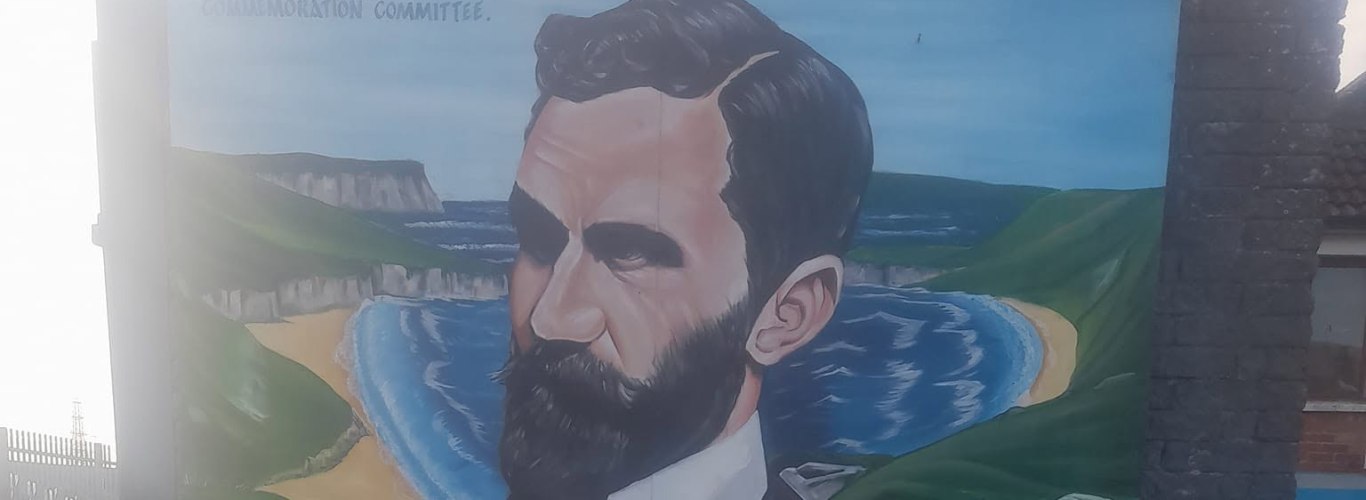
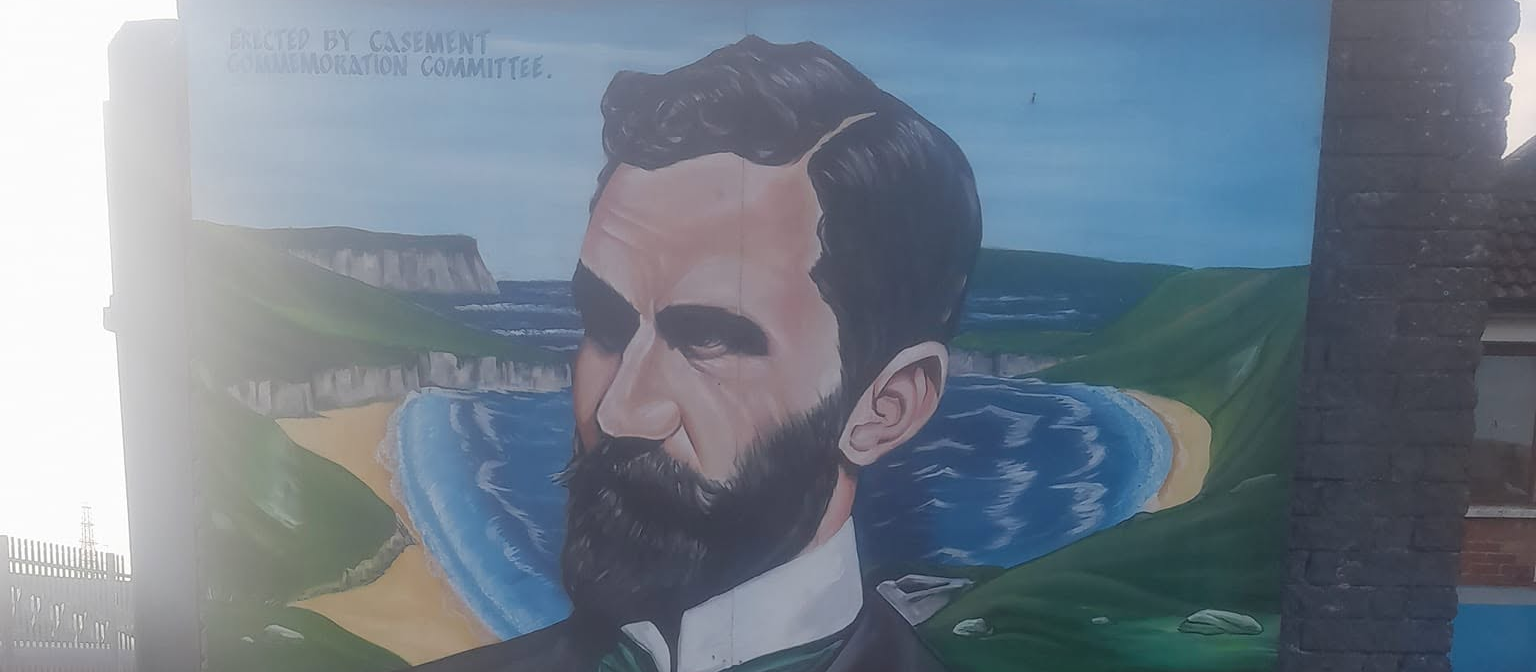
Recently, there has been a campaign to have Casement’s remains removed from Glasnevin cemetery and re-interred at Murlough Bay in North Antrim. Casement personally chose the spot where he wished his final resting place to be.
I took the opportunity to read through the Irish State papers to see how this extraordinary man ended up in Glasnevin, having originally been buried within Pentonville prison in London after his execution.
From the State archives, it appears that the post-civil war Government of William Cosgrave did not make any effort to request the repatriation of Casements remains. The change of Government in 1932 brought a much more Republican inclined Fianna Fáil administration into power.
In January 1936, the President of the Executive Council, Eamon de Valera, wrote personally to British Prime Minister, Stanley Baldwin, requesting that
“the remains of the late Roger Casement be repatriated and interred in Ireland”.
His request was rejected and Baldwin told Dev that
“the repatriation of Casement’s remains and, above all, the publicity which would inevitably ensue would be bound to lead to a recrudescence of controversy and indeed, so far at any rate as some sections of public opinion are concerned, would make for the embitterment of relations rather than the appeasement which we both desire”.
This did not deter the Irish authorities from frequently raising the issue with the British over the years. Dev again raised the matter directly with then Prime Minister, Winston Churchill, when they met in London in September 1953. Churchill followed up that discussion with a letter to Dev in the following month, again refusing the Irish request. Churchill, who had a very complicated relationship with Ireland, was more sympathetic and stated he was sorry not to be able to accede to Dev’s request but “the law is specific and binding” adding that there would be great difficulties if he sought to amend that law and that apart from the legal difficulties
“I am sure we should avoid the risk of reviving old controversies and reawakening the bitter memories of old differences”.
By the early 1960s, British attitudes were beginning to change and Anglo-Irish relations were improving. The new Taoiseach, Seán Lemass, wrote to Harold MacMillan in April 1961 after British Labour M.P. for Ayrshire, Emrys Hughes, tabled a bill providing for Casement’s remains to return to Ireland. Lemass, however, was to be disappointed as MacMillan again refused the Irish request.
The Labour victory in the 1964 British General election brough Harold Wilson to power. The new PM had shown much more interest in Ireland than his predecessors and was on very friendly terms with Irish community groups, even attending the Saint Patrick’s dinner at the old Irish club. Lemass lost no time in writing to him in November 1964, again requesting the return of Casement’s remains, stating that his request had the support of all the parties in the Republic. It would
“remove an unnecessary irritant in the relations between our countries and would rebound to the credit of the British Government which sanctioned it.”
He added that a plot had been purchased in Glasnevin cemetery for his re-internment, which had been agreed with Casement’s sister.
Wilson was minded to accede to the Irish request and hoped that Lemass would attend the funeral of Winston Churchill in 1965, where he would personally tell the Taoiseach of his decision to grant the request. But Lemass declined the invitation to the Churchill funeral. The Minister for External Affairs, Frank Aiken, went instead of the Taoiseach and Wilson requested a meeting with him. At that meeting, he told Aiken that the British would finally agree to Dublin’s entreaties on the matter.
The archives show that the British civil service was a lot less enthusiastic than Wilson about the transfer, and in subsequent exchanges sought the guarantee that Casement’s remains would stay in Dublin and that there would be no question of them being sent to Murlough Bay.
The Irish authorities gave the assurance, and after consultation with Minister Aiken replied that
“in our view, any question of the further removal of the remains should not be considered until the unity of Ireland has been restored”.
The Irish side asked that the correspondence should not be published. They did insist at the time that there was no suggestion of an assurance or bargain which would detract from the whole operation. However, on 16 February 1965, Lemass wrote to Wilson and stated
“I wish to confirm what Mr. Aiken said to you that the Irish Government have decided to re-inter the remains in the grave in Glasnevin Cemetery, Dublin, which was chosen by Casement’s sister, Mrs. Newman, in 1925 and that it is our intention that they should rest there.
I may add that, in our view, any question of the further removal of the remains should not be considered until the unity of Ireland has been restored.”
Subsequently the Department of External Affairs obtained the agreement of Casement’s two surviving nieces in Australia to the arrangements. The British were concerned that Casement’s relatives might demand a burial at Murlough, something they wished to avoid.
The British then wanted Casement’s remains rapidly transferred to Dublin before any public announcement in the House of Commons was made. The exhumation was speedily undertaken. Paul Keating, a member of the Irish Embassy staff was present at the prison during the exhumation. It commenced at 5pm behind screens on the evening of the 22st of February 1965. Keating provided a very good and detailed account of the operation in his report to Dublin. It is ghoulish in places.
The work was started at dusk to prevent the prisoners at Pentonville from observing the proceedings. Although Keating, in his report, did notice one prisoner using a mirror as a periscope to observe the operation. Keating reported that contrary to the prison records, some lime had been included in the original burial, which he put down to malice. He mentioned that Casement’s skull still contained some of his original black hair. He also commented that Casement was clearly a very tall individual.
The remains were whisked off to Northolt airfield and flown to Baldonnel military aerodrome in west Dublin (since renamed Casement aerodrome). Wilson also agreed to the transfer of the Irish tricolour which flew over the GPO in Easter week be given back to the Irish authorities.
There is considerable material in the archives about the Casement diaries and the ambiguity of the Irish Authorities towards them. There was frustration among those campaigning for their transfer to Ireland when they learned that the Irish Government would not agree to request their transfer, merely re-iterating De Valera’s statement that the diaries were irrelevant, as “Casement’s reputation is safe in the affections of the Irish people”.
In March 1965, the Irish authorities privately asked Dr Richard Hayes, Director of the National Library of Ireland, if it would be possible to prove scientifically whether the diaries were forged or authentic. Hayes replied it might be possible to do so but said that his own opinion was that they were genuine from reading other material Casement produced. This dulled the appetite about asking Harold Wilson for their return.
While I regularly call to Casement’s grave in Glasnevin in north Dublin as it is close to my own parents’ final resting place, I fully support the campaign to have his remains interred in Murlough Bay. However, I believe it would be necessary to speak to the British Government to release the Irish authorities from any assurance given in 1965. The present Labour administration would be much more likely to agree to that than a future more conservative administration.

by Paul Breen
From an early age, I was very interested in the life of Roger Casement and his exploits in Peru and the Belgium Congo. Here was a very successful diplomat, who essentially gave up a comfortable and profitable life in the establishment for a cause he believed in, namely Irish Independence. I greatly admired his courage. He was a pillar of the establishment, being knighted for his humanitarian work. He sacrificed all this and also in the end, his life.
Later, I became a diplomat myself and my interest grew stronger in my fellow Dubliner. The diplomatic world does not treat kindly those whom they believe have betrayed this elite group. He was executed for treason after his attempts to engage German help for the rebels in 1916. Casement was no great admirer of his allies but felt they could be helpful in securing his own country’s freedom.
Recently, there has been a campaign to have Casement’s remains removed from Glasnevin cemetery and re-interred at Murlough Bay in North Antrim. Casement personally chose the spot where he wished his final resting place to be.
I took the opportunity to read through the Irish State papers to see how this extraordinary man ended up in Glasnevin, having originally been buried within Pentonville prison in London after his execution.
From the State archives, it appears that the post-civil war Government of William Cosgrave did not make any effort to request the repatriation of Casements remains. The change of Government in 1932 brought a much more Republican inclined Fianna Fáil administration into power.
In January 1936, the President of the Executive Council, Eamon de Valera, wrote personally to British Prime Minister, Stanley Baldwin, requesting that
“the remains of the late Roger Casement be repatriated and interred in Ireland”.
His request was rejected and Baldwin told Dev that
“the repatriation of Casement’s remains and, above all, the publicity which would inevitably ensue would be bound to lead to a recrudescence of controversy and indeed, so far at any rate as some sections of public opinion are concerned, would make for the embitterment of relations rather than the appeasement which we both desire”.
This did not deter the Irish authorities from frequently raising the issue with the British over the years. Dev again raised the matter directly with then Prime Minister, Winston Churchill, when they met in London in September 1953. Churchill followed up that discussion with a letter to Dev in the following month, again refusing the Irish request. Churchill, who had a very complicated relationship with Ireland, was more sympathetic and stated he was sorry not to be able to accede to Dev’s request but “the law is specific and binding” adding that there would be great difficulties if he sought to amend that law and that apart from the legal difficulties
“I am sure we should avoid the risk of reviving old controversies and reawakening the bitter memories of old differences”.
By the early 1960s, British attitudes were beginning to change and Anglo-Irish relations were improving. The new Taoiseach, Seán Lemass, wrote to Harold MacMillan in April 1961 after British Labour M.P. for Ayrshire, Emrys Hughes, tabled a bill providing for Casement’s remains to return to Ireland. Lemass, however, was to be disappointed as MacMillan again refused the Irish request.
The Labour victory in the 1964 British General election brough Harold Wilson to power. The new PM had shown much more interest in Ireland than his predecessors and was on very friendly terms with Irish community groups, even attending the Saint Patrick’s dinner at the old Irish club. Lemass lost no time in writing to him in November 1964, again requesting the return of Casement’s remains, stating that his request had the support of all the parties in the Republic. It would
“remove an unnecessary irritant in the relations between our countries and would rebound to the credit of the British Government which sanctioned it.”
He added that a plot had been purchased in Glasnevin cemetery for his re-internment, which had been agreed with Casement’s sister.
Wilson was minded to accede to the Irish request and hoped that Lemass would attend the funeral of Winston Churchill in 1965, where he would personally tell the Taoiseach of his decision to grant the request. But Lemass declined the invitation to the Churchill funeral. The Minister for External Affairs, Frank Aiken, went instead of the Taoiseach and Wilson requested a meeting with him. At that meeting, he told Aiken that the British would finally agree to Dublin’s entreaties on the matter.
The archives show that the British civil service was a lot less enthusiastic than Wilson about the transfer, and in subsequent exchanges sought the guarantee that Casement’s remains would stay in Dublin and that there would be no question of them being sent to Murlough Bay.
The Irish authorities gave the assurance, and after consultation with Minister Aiken replied that
“in our view, any question of the further removal of the remains should not be considered until the unity of Ireland has been restored”.
The Irish side asked that the correspondence should not be published. They did insist at the time that there was no suggestion of an assurance or bargain which would detract from the whole operation. However, on 16 February 1965, Lemass wrote to Wilson and stated
“I wish to confirm what Mr. Aiken said to you that the Irish Government have decided to re-inter the remains in the grave in Glasnevin Cemetery, Dublin, which was chosen by Casement’s sister, Mrs. Newman, in 1925 and that it is our intention that they should rest there.
I may add that, in our view, any question of the further removal of the remains should not be considered until the unity of Ireland has been restored.”
Subsequently the Department of External Affairs obtained the agreement of Casement’s two surviving nieces in Australia to the arrangements. The British were concerned that Casement’s relatives might demand a burial at Murlough, something they wished to avoid.
The British then wanted Casement’s remains rapidly transferred to Dublin before any public announcement in the House of Commons was made. The exhumation was speedily undertaken. Paul Keating, a member of the Irish Embassy staff was present at the prison during the exhumation. It commenced at 5pm behind screens on the evening of the 22st of February 1965. Keating provided a very good and detailed account of the operation in his report to Dublin. It is ghoulish in places.
The work was started at dusk to prevent the prisoners at Pentonville from observing the proceedings. Although Keating, in his report, did notice one prisoner using a mirror as a periscope to observe the operation. Keating reported that contrary to the prison records, some lime had been included in the original burial, which he put down to malice. He mentioned that Casement’s skull still contained some of his original black hair. He also commented that Casement was clearly a very tall individual.
The remains were whisked off to Northolt airfield and flown to Baldonnel military aerodrome in west Dublin (since renamed Casement aerodrome). Wilson also agreed to the transfer of the Irish tricolour which flew over the GPO in Easter week be given back to the Irish authorities.
There is considerable material in the archives about the Casement diaries and the ambiguity of the Irish Authorities towards them. There was frustration among those campaigning for their transfer to Ireland when they learned that the Irish Government would not agree to request their transfer, merely re-iterating De Valera’s statement that the diaries were irrelevant, as “Casement’s reputation is safe in the affections of the Irish people”.
In March 1965, the Irish authorities privately asked Dr Richard Hayes, Director of the National Library of Ireland, if it would be possible to prove scientifically whether the diaries were forged or authentic. Hayes replied it might be possible to do so but said that his own opinion was that they were genuine from reading other material Casement produced. This dulled the appetite about asking Harold Wilson for their return.
While I regularly call to Casement’s grave in Glasnevin in north Dublin as it is close to my own parents’ final resting place, I fully support the campaign to have his remains interred in Murlough Bay. However, I believe it would be necessary to speak to the British Government to release the Irish authorities from any assurance given in 1965. The present Labour administration would be much more likely to agree to that than a future more conservative administration.