Ciaran Hartley
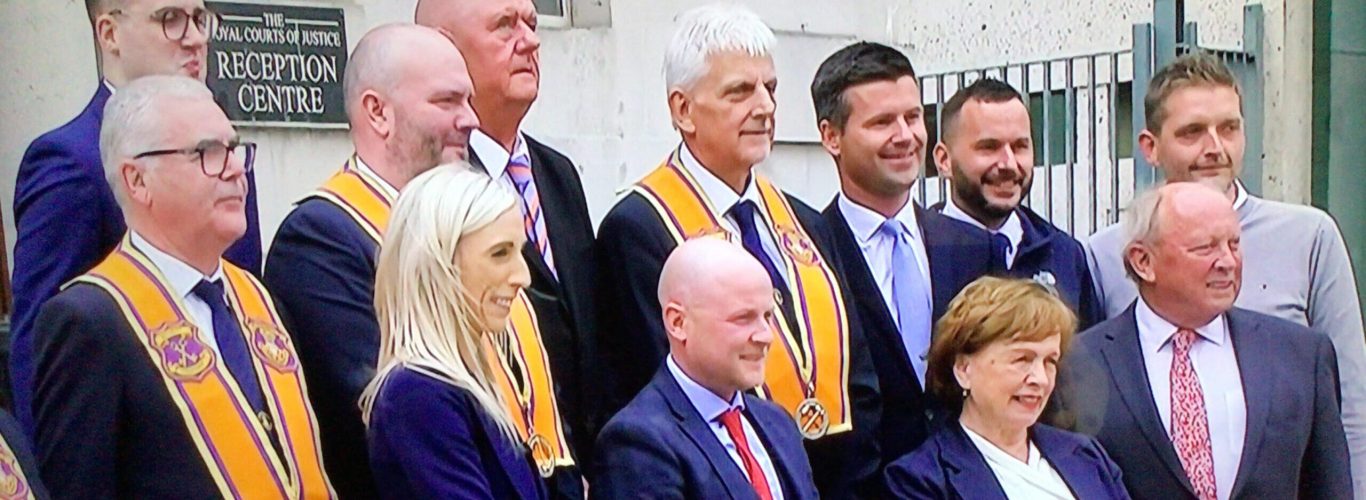
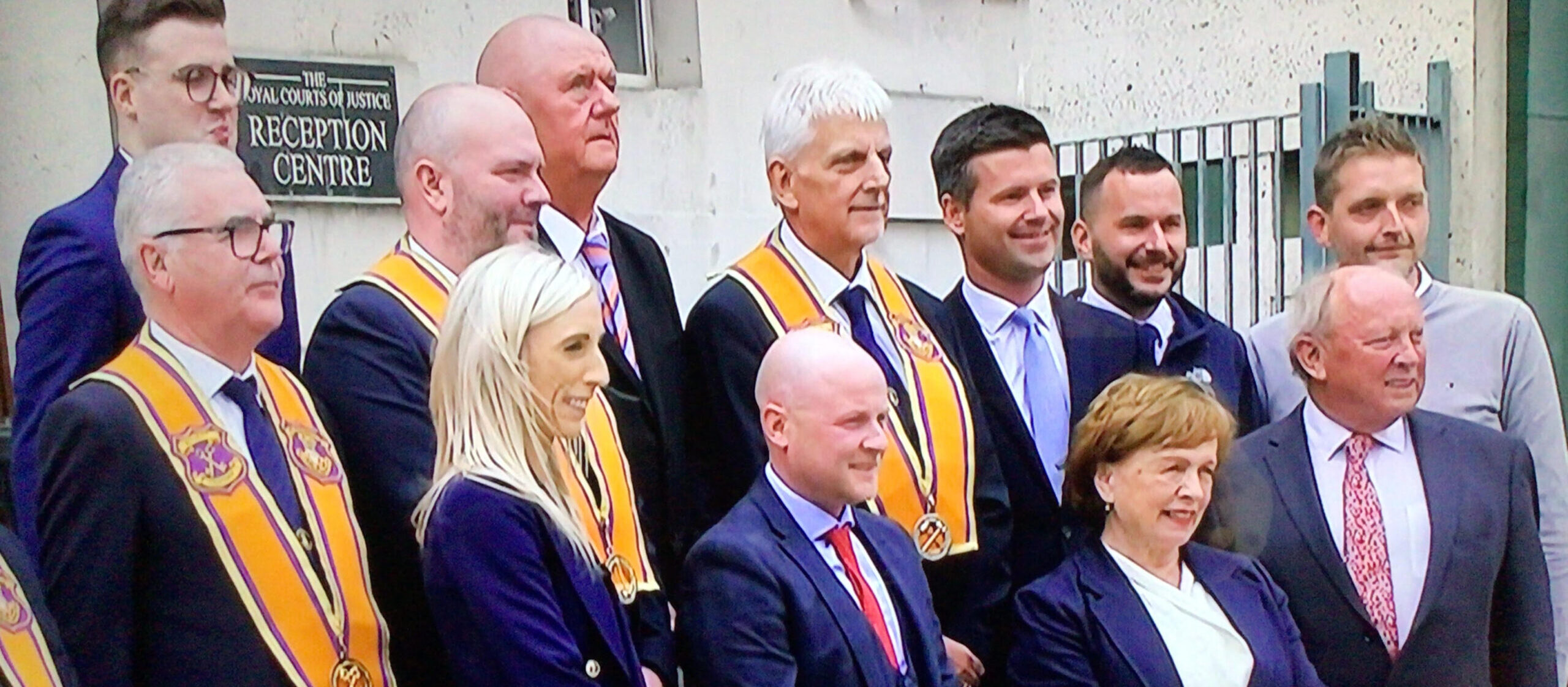
My previous article for Irish Border Poll was written on the back of Fleadh Cheoil na hÉireann and the overwhelming positivity it generated. Fast forward only a few weeks and the contrast couldn’t be more stark. The resurrection of the Drumcree parade and the associated stress and turbulence after 28 years of tranquillity on the Garvaghy Road was both unnecessary and avoidable. The Parades Commission, PSNI and indeed our courts have significant questions to answer regarding the protection of peace specifically and the Good Friday Agreement more broadly. ‘The right to freedom from sectarian harassment’ is there in black and white and appears flexible rather than absolute when it comes to a number of the circa 2,500 Protestant/Unionist/Loyalist parades that take place from Easter Sunday to the 18th of December annually. Quite a marching ‘season’.
The resurrection of Drumcree and its timing post-Fleadh and pre-2027 election provides a more honest assessment of where politics in the north are actually at. Nationalist parties and People Before Profit galvanised around the Garvaghy Road residents while political Unionism supported the Drumcree Orange men. Naomi Long appealed to the OO as ‘Christians… to act for the greater good than those engaging in unlawful protests’ in a tweet that was subsequently removed. Make of that what you will. Our mainstream media has been instrumental in attempting to normalise OO parading while also key to raising the public profile of a number of leading Unionists. Their false equivalence framing rarely if at all mentions that there is an alternative route for the OO that avoids the Garvaghy Road entirely.
Calling for the OO to be forced down the Garvaghy Road is an attempt to ignite a ‘culture war’, indeed one of the key protagonists wrote a book to that effect. At a time when the Irish unity campaign is gaining significant momentum, rather than convincing people through the power of their ideas the culture warriors rouse deep seated rage and fear. Regression to a fundamentalist Unionism provokes instinctual reaction rather rational response. Because of its emotive nature critical thinking is avoided. This at a time when much of the current DUP top-brass, Jim Shannon, Gregory Campbell and Sammy Wilson are under investigations of one type or another while their former leader is in jail. Are there any other scandals in the background waiting to emerge I wonder? What is evident is that under this manufactured fiasco is a distinct lack of substance. As such the people supporting this parade focus on one-upmanship rather than answering important societal questions. What are their proposals to address the cost of living crisis, to stop violence against women and girls? What are their positions on academic selection and addressing educational underachievement for Protestant boys and across the community more generally…? I would particularly urge working-class unionists to ask themselves what they see as the important issues in their own lives. These people have no answers as to how to put money in your pocket, food on your table or a roof over your head. This is a cynical distraction led by the unelected to inflame the electorate in an attempt to crash the peace process, where nihilism meets opportunism.
As a movement Unionism is now a shadow of its former self with a leadership devoid of any gravitas or charisma lacking any discernible long-term vision. Reverting to ‘getting one over on the Fenians’ is tried and tested but is no substitute for strategic planning. Having never fully embraced power-sharing or parity of esteem since the Good Friday Agreement Drumcree is essentially an outworking of all of that. While the odd Pyrrhic victory may bring fleeting joy what has long struck me about Unionists is that they don’t seem very happy in their Unionism. Regularly indignant, it really must be exhausting being that angry all the time. If getting one over on your neighbour is the pinnacle of your ambitions, then it really does not say a lot for the direction you wish to go in. Thankfully, there are many people from within the culturally unionist community who do not feel represented by this antagonistic style of politics and see its direction of travel. Moreover, there are those who are willing to bravely put their heads above the parapet to counter such a trajectory.
At a sold Lyric Theatre on the 23rd of September, Ireland’s Future hosted a range of speakers. MEPs from the Republic talked of EU impact on the unity campaign while Professor Seamus McGuinness outlined some of the north-south comparative data on a range of issues such as educational attainment and mortality rates. The north was worse than the south in all counts, considerably so in some areas. But the real highlight of the event for me was the first panel with all speakers from a culturally Protestant/unionist background. Because of their stance on Irish unity they have euphemistically called themselves ‘The Happy Lundies’. They shared their stories on how they became unity converts and reflected on some of the backlash they faced and continue to face. But their overarching message was that they wished to encourage others from their community to become unity curious. Wallace Thompson believes that ‘Northern Ireland’ simply ‘isn’t viable’ as an entity while Jemma McSherry, the youngest panellist, challenged southern neo-liberal orthodoxy and dominance of US multi-nationals in the Republic. If the contemporary Drumcree dispute is a rewind to 1795 when the OO was formed in north Armagh, then the Happy Lundies offer a glimpse of a future unshackled by the toxic legacy of colonialism. Drumcree may yet be the hill that fundamentalist Unionism goes to die providing the final impetus for small ‘u’ unionists to fully embrace Irish unity as attractive and achievable. In closing the event at the Lyric Ireland’s Future chair Niall Murphy ended proceedings with an exceptional address with the following concluding remarks:
“We are now entering the final stage of our journey. Indeed, it is our privilege, through an artificial quirk of our dates of birth, that we are the generation, after 800 years, who will welcome, shape, and mould a new and united Ireland. What a privilege it is to be alive to work towards that special day.”
An Phoblacht abú!
Ciaran Hartley
My previous article for Irish Border Poll was written on the back of Fleadh Cheoil na hÉireann and the overwhelming positivity it generated. Fast forward only a few weeks and the contrast couldn’t be more stark. The resurrection of the Drumcree parade and the associated stress and turbulence after 28 years of tranquillity on the Garvaghy Road was both unnecessary and avoidable. The Parades Commission, PSNI and indeed our courts have significant questions to answer regarding the protection of peace specifically and the Good Friday Agreement more broadly. ‘The right to freedom from sectarian harassment’ is there in black and white and appears flexible rather than absolute when it comes to a number of the circa 2,500 Protestant/Unionist/Loyalist parades that take place from Easter Sunday to the 18th of December annually. Quite a marching ‘season’.
The resurrection of Drumcree and its timing post-Fleadh and pre-2027 election provides a more honest assessment of where politics in the north are actually at. Nationalist parties and People Before Profit galvanised around the Garvaghy Road residents while political Unionism supported the Drumcree Orange men. Naomi Long appealed to the OO as ‘Christians… to act for the greater good than those engaging in unlawful protests’ in a tweet that was subsequently removed. Make of that what you will. Our mainstream media has been instrumental in attempting to normalise OO parading while also key to raising the public profile of a number of leading Unionists. Their false equivalence framing rarely if at all mentions that there is an alternative route for the OO that avoids the Garvaghy Road entirely.
Calling for the OO to be forced down the Garvaghy Road is an attempt to ignite a ‘culture war’, indeed one of the key protagonists wrote a book to that effect. At a time when the Irish unity campaign is gaining significant momentum, rather than convincing people through the power of their ideas the culture warriors rouse deep seated rage and fear. Regression to a fundamentalist Unionism provokes instinctual reaction rather rational response. Because of its emotive nature critical thinking is avoided. This at a time when much of the current DUP top-brass, Jim Shannon, Gregory Campbell and Sammy Wilson are under investigations of one type or another while their former leader is in jail. Are there any other scandals in the background waiting to emerge I wonder? What is evident is that under this manufactured fiasco is a distinct lack of substance. As such the people supporting this parade focus on one-upmanship rather than answering important societal questions. What are their proposals to address the cost of living crisis, to stop violence against women and girls? What are their positions on academic selection and addressing educational underachievement for Protestant boys and across the community more generally…? I would particularly urge working-class unionists to ask themselves what they see as the important issues in their own lives. These people have no answers as to how to put money in your pocket, food on your table or a roof over your head. This is a cynical distraction led by the unelected to inflame the electorate in an attempt to crash the peace process, where nihilism meets opportunism.
As a movement Unionism is now a shadow of its former self with a leadership devoid of any gravitas or charisma lacking any discernible long-term vision. Reverting to ‘getting one over on the Fenians’ is tried and tested but is no substitute for strategic planning. Having never fully embraced power-sharing or parity of esteem since the Good Friday Agreement Drumcree is essentially an outworking of all of that. While the odd Pyrrhic victory may bring fleeting joy what has long struck me about Unionists is that they don’t seem very happy in their Unionism. Regularly indignant, it really must be exhausting being that angry all the time. If getting one over on your neighbour is the pinnacle of your ambitions, then it really does not say a lot for the direction you wish to go in. Thankfully, there are many people from within the culturally unionist community who do not feel represented by this antagonistic style of politics and see its direction of travel. Moreover, there are those who are willing to bravely put their heads above the parapet to counter such a trajectory.
At a sold Lyric Theatre on the 23rd of September, Ireland’s Future hosted a range of speakers. MEPs from the Republic talked of EU impact on the unity campaign while Professor Seamus McGuinness outlined some of the north-south comparative data on a range of issues such as educational attainment and mortality rates. The north was worse than the south in all counts, considerably so in some areas. But the real highlight of the event for me was the first panel with all speakers from a culturally Protestant/unionist background. Because of their stance on Irish unity they have euphemistically called themselves ‘The Happy Lundies’. They shared their stories on how they became unity converts and reflected on some of the backlash they faced and continue to face. But their overarching message was that they wished to encourage others from their community to become unity curious. Wallace Thompson believes that ‘Northern Ireland’ simply ‘isn’t viable’ as an entity while Jemma McSherry, the youngest panellist, challenged southern neo-liberal orthodoxy and dominance of US multi-nationals in the Republic. If the contemporary Drumcree dispute is a rewind to 1795 when the OO was formed in north Armagh, then the Happy Lundies offer a glimpse of a future unshackled by the toxic legacy of colonialism. Drumcree may yet be the hill that fundamentalist Unionism goes to die providing the final impetus for small ‘u’ unionists to fully embrace Irish unity as attractive and achievable. In closing the event at the Lyric Ireland’s Future chair Niall Murphy ended proceedings with an exceptional address with the following concluding remarks:
“We are now entering the final stage of our journey. Indeed, it is our privilege, through an artificial quirk of our dates of birth, that we are the generation, after 800 years, who will welcome, shape, and mould a new and united Ireland. What a privilege it is to be alive to work towards that special day.”
An Phoblacht abú!