by Ray Bassett
On the 16th of May 1926, Eamon de Valera, and a group of his supporters, founded a new political party in the La Scala Theatre, just off Dublin’s main thoroughfare, O’Connell Street. The new party was a split from Sinn Féin, the split occurred over de Valera’s desire to participate in the new Irish Free State’s Institutions. The new party took the title Fianna Fáil, or in English the Soldiers of Destiny. The remainder of Sinn Féin continued its abstentionist policy, under the leadership of Mary McSwiney, sister of Terence McSwiney, the Lord Mayor of Cork who died on hunger strike in 1920.
Dev’s new Party adopted a radical economic platform and also dedicated itself to national Irish unity; the restoration of the Irish language; and pending re-unification, to Republicanize the institutions of the Irish Free State in the 26 counties. The Wall Street crash and the consequent economic crisis damaged support for the incumbent Cosgrave administration and propelled Fianna Fáil into Government in Dublin in 1932. It needed the assistance of the Irish Labour Party to assume power.
The incoming administration promised to release all IRA prisoners; abolish the oath of allegiance for Parliamentarians to the Crown; and reduce the powers of the Governor-General and the undemocratic Irish Senate. It also promised the introduction of protectionist trade policies, industrial development, and improvements in housing and social security benefits. The party was very strong on national sovereignty and in power negotiated the evacuation of the last 3 British military bases in the Free State. It did not enact the Statute of Westminster of 1931 in which the British Government, for the first time, conceded full legislative independence to the Dominions, including Ireland. It did so on the basis that they never recognised London’s right to rule Ireland in the first place.
The changeover of power in Dublin caused great unease among the better off elements locally and throughout the British Commonwealth. It was rumoured that some members of the outgoing Cosgrave administration brought revolvers into the Dáil for fear what Fianna Fáil might plan to do. During the election campaign, De Valera had been described as the Irish Stalin and the Fianna Fáil party as communist. The Commissioner of the Guards, Eoin O’Duffy, privately urged a military coup but the outgoing President of the Executive Council, William Cosgrave, resisted efforts to thwart democracy and insisted on a peaceful transfer of power.
The new Government refused to pay Britain the annual land annuities, leading to severe tariffs and restrictions on Irish exports to the United Kingdom. While this caused severe hardship, especially among large farmers, public opinion swung behind the new Government as they admired their resolve in standing up to London.
It also embarked on a major slum clearance programme in Dublin, creating new suburbs in places like Ballyfermot, Cabra, Finglas, etc,. The Land Commission actively engaged in a radical policy of acquiring large rural estates and distributing the land to small farmers. These policies engendered great loyalty among the working class population, which had benefited from these policies. Up until recent times, Fianna Fáil attracted the majority of trade union members’ support in general elections.
In foreign policy, the Fianna Fáil Government resisted Opposition parties and Catholic Church pressure to recognise Franco while the Spanish civil war was ongoing. It operated a policy of neutrality in World War II, while privately favouring the Allies.
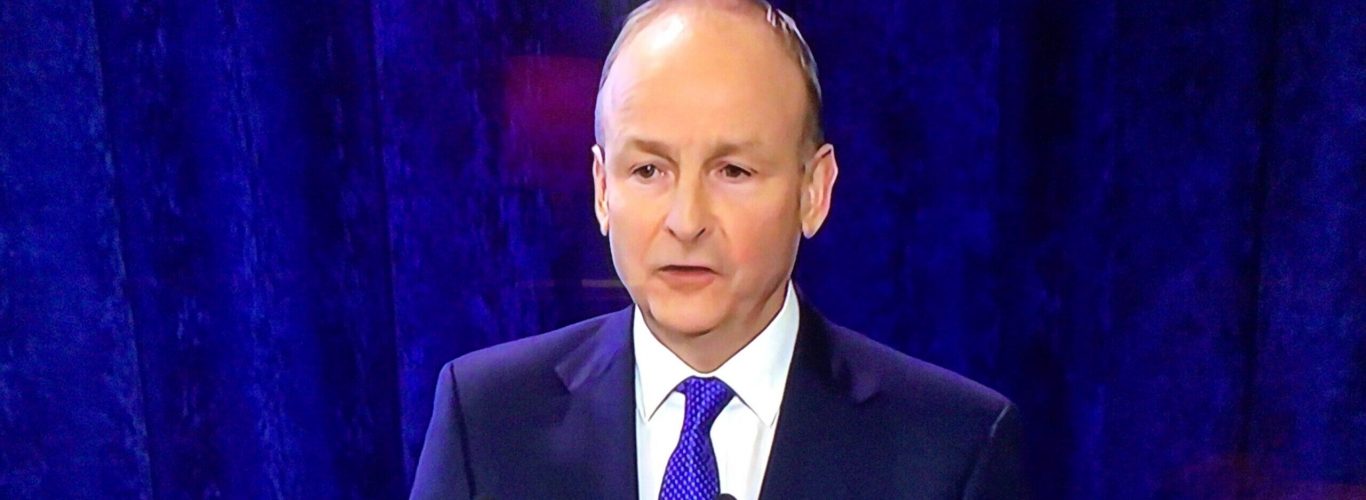
So today under Micheál Martin, how does the modern Fianna Fáil stack up against the ideals and aspirations of its founders.
Firstly, it has to be acknowledged that all parties mutate overtime to meet a changing domestic and external landscape. However, it is very difficult to discern the connection the modern Fianna Fáil party, under Micheál Martin, has with the group which first came to power with its own set of ideals or indeed the party I knew when I was growing up in Dublin. What made Fianna Fáil different was its commitment to Republicanism and national unity. It was the dominant party in working class areas.
Today, the party has abandoned its core Republicanism. Its current leader has, in effect, retreated from the Good Friday Agreement, negotiated in large part by the party’s former leader, Bertie Ahern. Martin opposes a border poll—the mechanism approved by the electorate as the democratic pathway to reunification and a central tenet of the Agreement.
However, it is in its attitude to the North and Northern Nationalists that the contrast between the Fianna Fáil of old and the current leadership is at its sharpest. The old Dublin engagement with the North has largely died away with very little community visits by the Taoiseach and senior Ministers, particularly to strongly Nationalist areas. Martin has initiated the welcome Shared Island Initiative but as the deputy Leader of Fianna Fáil, Jack Chambers has said, it should not be seen as promoting, in any way, Irish re-unification. The party leader’s attitude to Sinn Féin in the Dáil is one of bristling hostility, reminiscent of the hard line Unionist leaders of the past. His position is in contrast to the other party in Government, Fine Gael, who are warming to the idea of Irish Unity, under current leader, Simon Harris, and his predecessor, Leo Varadkar. That party maintains cordial relations with Sinn Féin in the Oireachtas.
As support grows internationally for Irish Unity with both Gordon Brown and President Trump expressing support, Martin looks increasingly out of touch and isolated.
Martin is also very much opposed to the whole concept of national sovereignty, stating that he wanted “nothing to do with a backward idea of sovereignty”. His own guiding principle is a blind devotion to the European Union. His Government voluntarily signed the EU Migration Pact, turning over some powers on immigration to Brussels, despite Ireland, under a previous Fianna Fáil Government, negotiating an opt out on immigration matters. Martin also wants to press ahead with abolishing the country’s “triple lock” system of agreeing to send military forces overseas. He wants to drop the requirement of United Nations involvement. The purpose behind his current proposal is to abandon Fianna Fáil’s long commitment to neutrality, an Irish policy which goes back to the time of Wolfe Tone. The Triple Lock was introduced by a previous Fianna Fáil administration.
It should be noted that party founder De Valera was very unenthusiastic about his successors enthusiasm for giving up powers to Brussels.
There are many inside Fianna Fáil, I would imagine a majority, who are uncomfortable with Martin’s anti Nationalist line on the North and opposition to a border poll. There is a strong prevailing view (and hope!) that he will step down as party leader at the end of this year and after Ireland’s Presidency of the EU. His preferred candidate in any contest, Jack Chambers, seems unlikely to be the next leader, especially with a succession of gloomy polls both for the party and for Micheál Martin himself. The favourite at the moment appears to be Justice Minister, Jim O’Callaghan, who is much more in line with traditional Fianna Fáil attitudes.
While it is very apparent that the old Fianna Fáil often fell short of the ideals they proclaimed and that corruption crept into their Governments after a long period in power. However, they did articulate an authentic Irish outlook on the world. It is hard to argue that the current Fianna Fáil leadership are in the tradition of their predecessors. In fact, it is very difficult to identify any set of fundamental policies which are espoused by the current leadership, other than antagonism to Irish Unity and a desire to transfer as much of the country’s remaining sovereignty to Brussels.
A legitimate question can be asked, has the party lost its soul and will Jim O’Callaghan be able to recover the lost ground. Only time will tell. It is certainly a far cry from the group of Republicans who gathered in the La Scala theatre a century ago.
by Ray Bassett
On the 16th of May 1926, Eamon de Valera, and a group of his supporters, founded a new political party in the La Scala Theatre, just off Dublin’s main thoroughfare, O’Connell Street. The new party was a split from Sinn Féin, the split occurred over de Valera’s desire to participate in the new Irish Free State’s Institutions. The new party took the title Fianna Fáil, or in English the Soldiers of Destiny. The remainder of Sinn Féin continued its abstentionist policy, under the leadership of Mary McSwiney, sister of Terence McSwiney, the Lord Mayor of Cork who died on hunger strike in 1920.
Dev’s new Party adopted a radical economic platform and also dedicated itself to national Irish unity; the restoration of the Irish language; and pending re-unification, to Republicanize the institutions of the Irish Free State in the 26 counties. The Wall Street crash and the consequent economic crisis damaged support for the incumbent Cosgrave administration and propelled Fianna Fáil into Government in Dublin in 1932. It needed the assistance of the Irish Labour Party to assume power.
The incoming administration promised to release all IRA prisoners; abolish the oath of allegiance for Parliamentarians to the Crown; and reduce the powers of the Governor-General and the undemocratic Irish Senate. It also promised the introduction of protectionist trade policies, industrial development, and improvements in housing and social security benefits. The party was very strong on national sovereignty and in power negotiated the evacuation of the last 3 British military bases in the Free State. It did not enact the Statute of Westminster of 1931 in which the British Government, for the first time, conceded full legislative independence to the Dominions, including Ireland. It did so on the basis that they never recognised London’s right to rule Ireland in the first place.
The changeover of power in Dublin caused great unease among the better off elements locally and throughout the British Commonwealth. It was rumoured that some members of the outgoing Cosgrave administration brought revolvers into the Dáil for fear what Fianna Fáil might plan to do. During the election campaign, De Valera had been described as the Irish Stalin and the Fianna Fáil party as communist. The Commissioner of the Guards, Eoin O’Duffy, privately urged a military coup but the outgoing President of the Executive Council, William Cosgrave, resisted efforts to thwart democracy and insisted on a peaceful transfer of power.
The new Government refused to pay Britain the annual land annuities, leading to severe tariffs and restrictions on Irish exports to the United Kingdom. While this caused severe hardship, especially among large farmers, public opinion swung behind the new Government as they admired their resolve in standing up to London.
It also embarked on a major slum clearance programme in Dublin, creating new suburbs in places like Ballyfermot, Cabra, Finglas, etc,. The Land Commission actively engaged in a radical policy of acquiring large rural estates and distributing the land to small farmers. These policies engendered great loyalty among the working class population, which had benefited from these policies. Up until recent times, Fianna Fáil attracted the majority of trade union members’ support in general elections.
In foreign policy, the Fianna Fáil Government resisted Opposition parties and Catholic Church pressure to recognise Franco while the Spanish civil war was ongoing. It operated a policy of neutrality in World War II, while privately favouring the Allies.
So today under Micheál Martin, how does the modern Fianna Fáil stack up against the ideals and aspirations of its founders.
Firstly, it has to be acknowledged that all parties mutate overtime to meet a changing domestic and external landscape. However, it is very difficult to discern the connection the modern Fianna Fáil party, under Micheál Martin, has with the group which first came to power with its own set of ideals or indeed the party I knew when I was growing up in Dublin. What made Fianna Fáil different was its commitment to Republicanism and national unity. It was the dominant party in working class areas.
Today, the party has abandoned its core Republicanism. Its current leader has, in effect, retreated from the Good Friday Agreement, negotiated in large part by the party’s former leader, Bertie Ahern. Martin opposes a border poll—the mechanism approved by the electorate as the democratic pathway to reunification and a central tenet of the Agreement.
However, it is in its attitude to the North and Northern Nationalists that the contrast between the Fianna Fáil of old and the current leadership is at its sharpest. The old Dublin engagement with the North has largely died away with very little community visits by the Taoiseach and senior Ministers, particularly to strongly Nationalist areas. Martin has initiated the welcome Shared Island Initiative but as the deputy Leader of Fianna Fáil, Jack Chambers has said, it should not be seen as promoting, in any way, Irish re-unification. The party leader’s attitude to Sinn Féin in the Dáil is one of bristling hostility, reminiscent of the hard line Unionist leaders of the past. His position is in contrast to the other party in Government, Fine Gael, who are warming to the idea of Irish Unity, under current leader, Simon Harris, and his predecessor, Leo Varadkar. That party maintains cordial relations with Sinn Féin in the Oireachtas.
As support grows internationally for Irish Unity with both Gordon Brown and President Trump expressing support, Martin looks increasingly out of touch and isolated.
Martin is also very much opposed to the whole concept of national sovereignty, stating that he wanted “nothing to do with a backward idea of sovereignty”. His own guiding principle is a blind devotion to the European Union. His Government voluntarily signed the EU Migration Pact, turning over some powers on immigration to Brussels, despite Ireland, under a previous Fianna Fáil Government, negotiating an opt out on immigration matters. Martin also wants to press ahead with abolishing the country’s “triple lock” system of agreeing to send military forces overseas. He wants to drop the requirement of United Nations involvement. The purpose behind his current proposal is to abandon Fianna Fáil’s long commitment to neutrality, an Irish policy which goes back to the time of Wolfe Tone. The Triple Lock was introduced by a previous Fianna Fáil administration.
It should be noted that party founder De Valera was very unenthusiastic about his successors enthusiasm for giving up powers to Brussels.
There are many inside Fianna Fáil, I would imagine a majority, who are uncomfortable with Martin’s anti Nationalist line on the North and opposition to a border poll. There is a strong prevailing view (and hope!) that he will step down as party leader at the end of this year and after Ireland’s Presidency of the EU. His preferred candidate in any contest, Jack Chambers, seems unlikely to be the next leader, especially with a succession of gloomy polls both for the party and for Micheál Martin himself. The favourite at the moment appears to be Justice Minister, Jim O’Callaghan, who is much more in line with traditional Fianna Fáil attitudes.
While it is very apparent that the old Fianna Fáil often fell short of the ideals they proclaimed and that corruption crept into their Governments after a long period in power. However, they did articulate an authentic Irish outlook on the world. It is hard to argue that the current Fianna Fáil leadership are in the tradition of their predecessors. In fact, it is very difficult to identify any set of fundamental policies which are espoused by the current leadership, other than antagonism to Irish Unity and a desire to transfer as much of the country’s remaining sovereignty to Brussels.
A legitimate question can be asked, has the party lost its soul and will Jim O’Callaghan be able to recover the lost ground. Only time will tell. It is certainly a far cry from the group of Republicans who gathered in the La Scala theatre a century ago.