by Paul Breen
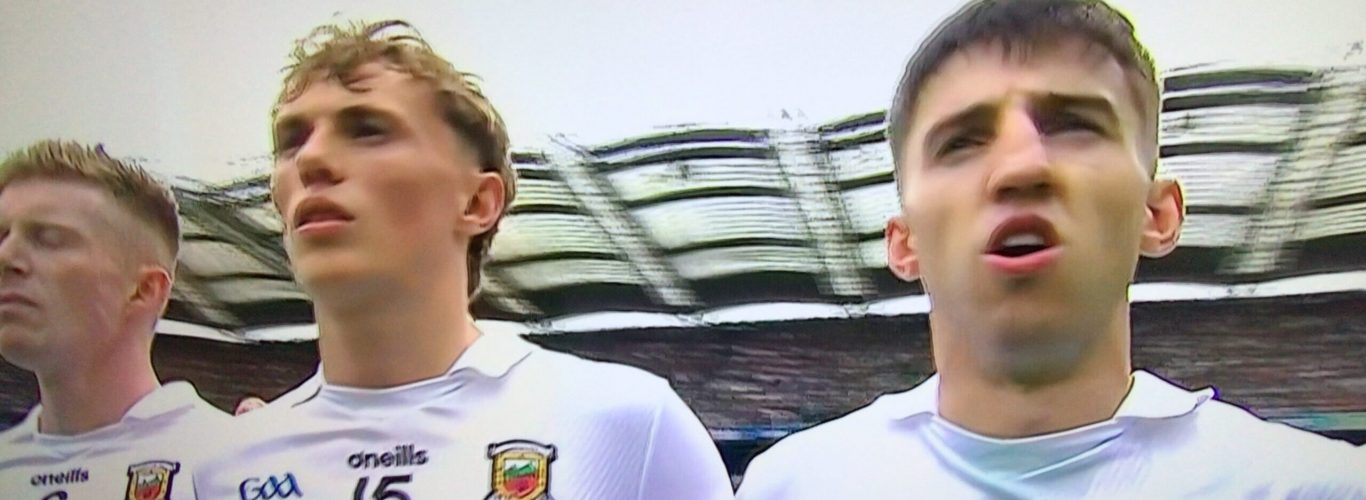
MAYO’S road to All-Ireland victory in 2026 has been a long time coming, with a lot of heartache paving the road to joy. Throughout my lifetime I’ve watched and waited and wondered why they could never get over the finishing line.
Some put it down to a curse, though for me it was far more personal. I thought I would never get to see my Mayo-born grandfather’s prophecy come true that “this is going to be our year.” That was the morning of July 13th 1980 before a Connacht final against Roscommon.
By the end of the day, Mayo had been annihilated by 3-13 to 0-8. It wouldn’t be their year and although Mayo won the Connacht final a year later on 12th July, my grandfather wasn’t really there to see it. He’d suffered a massive stroke and died on 14th July 1981.
Ever since those days I have followed Mayo, probably more than my native county Fermanagh at times because there’s really only one trophy that matters to many of us in the GAA world. That’s the ultimate prize, the Sam Maguire trophy, named for an Irish Protestant with London connections.
In that there’s a lesson about what Irishness and what the GAA means. It has never been a green version of The Orange Order, excluding people by virtue of their religion. Anyone and everyone of any shade, sex or steeple worship has a welcome home in Gaelic games.
And there are other lessons too in what Mayo have achieved. Lessons for those of us with an interest in Irish unity, and in building the kind of shared, secular Ireland that men and women of Sam Maguire’s era dreamed of.
Right now, Irish unity isn’t really on Britain’s horizon, in politics or public opinion. As evidenced on a daily basis, the peace process was probably only ever intended to be a pacification process. And not out of malice, it should be added.
Britain’s people, Britain’s press and Britain’s politicians just wanted to put Ireland’s sectarian squabbles into a box, close the lid and label it as ‘sorted.’ They probably never really expected demands for a Border Poll to materialise.
But such demands have materialised, moving from hope to ambition. However, sometimes it feels that dreams of Irish unity are like Mayo’s dreams of an All-Ireland in the first 25 years of this millennium. They were always close, within touching distance, but never close enough. They could never quite push the dream over the finishing line.
Every year the hope would come, heightened by some miracle along the road, only for inexplicable speed humps to derail things before the deal was done. Maybe in that way, Mayo’s story echoes Ireland’s in the years from 1900 to 1925.
Those are twin stories of ‘if only’ and ‘if not.’ Without send offs to World War One or sending offs at decisive times in two All-Ireland finals, history might have been very different. Then again, maybe such stories for the latter make it all the sweeter.
Bad luck aside though, I have always believed one of Mayo’s biggest problems was that they played with the heart and not the head through much of the recent past. A strength and a weakness at the same time, like a living example of a SWOT analysis.
Playing with the heart was great. But it didn’t always win matches and most frustratingly, they never seemed to kill off and shut down opponents the way that true champions did. Worst of all, the team of the 2010s was starting to age as the 2020s began.
Momentum appeared to have shifted away from Mayo’s drive to end the long wait. Then Andy Moran took charge; veteran star and author of a book about lessons learned from defeat. Something changed, not just tactically but in terms of mentality.
I’d put that down to three things – belief, preparation and execution. This year, despite hitting another few speed humps along the way, Mayo have careered towards victory. They’ve done something Ulster teams have always been great at when coming out of nowhere to win titles when nobody gave them a chance to begin with.
They’ve built momentum and belief along the way to glory in 2026. To do that, they’ve inevitably prepared well. When Andy Moran took over as Mayo manager he put in place a three year plan. And now he’s achieved the ultimate dream in a single year.
The drive towards Irish unity needs the same level of preparation and planning,. And belief. Irish parties need to make it more of a costed ambition than an aspiration. They need to decide that they want this, actually want it and have a plan for how they’re getting it.
For Andy Moran’s Mayo that was achieved with better execution on the pitch and breaking those old habits of the past. At times, especially in defence and in holding onto leads, Mayo were managing games the way that Ulster sides of the early 2000s would be proud of, whilst attacking Kerry-style.
This was done with confidence. It was done with belief. It was done by coming up with a game plan and seeing it through to the finish. It was also done with a much-needed infusion of youth. A thing the Irish unity debate needs too. New voices at every opportunity.
And two other last-minute points. We have to remember that in our political contest, sadly the referee’s not neutral. Never was and never will be but legally bound to follow the rules, thanks to The Good Friday Agreement. And our opponents won’t make things easy either, just like Donegal, Kerry, Tyrone and all the rest who have faced Mayo.
But if we up our game the right result’s possible. Mayo have shown us the road ahead, breaking curses, fulfilling prophecies and making dreams come true. Someday too, sooner than expected, we may live to see the morning after a lifelong dream has come true.
by Paul Breen
MAYO’S road to All-Ireland victory in 2026 has been a long time coming, with a lot of heartache paving the road to joy. Throughout my lifetime I’ve watched and waited and wondered why they could never get over the finishing line.
Some put it down to a curse, though for me it was far more personal. I thought I would never get to see my Mayo-born grandfather’s prophecy come true that “this is going to be our year.” That was the morning of July 13th 1980 before a Connacht final against Roscommon.
By the end of the day, Mayo had been annihilated by 3-13 to 0-8. It wouldn’t be their year and although Mayo won the Connacht final a year later on 12th July, my grandfather wasn’t really there to see it. He’d suffered a massive stroke and died on 14th July 1981.
Ever since those days I have followed Mayo, probably more than my native county Fermanagh at times because there’s really only one trophy that matters to many of us in the GAA world. That’s the ultimate prize, the Sam Maguire trophy, named for an Irish Protestant with London connections.
In that there’s a lesson about what Irishness and what the GAA means. It has never been a green version of The Orange Order, excluding people by virtue of their religion. Anyone and everyone of any shade, sex or steeple worship has a welcome home in Gaelic games.
And there are other lessons too in what Mayo have achieved. Lessons for those of us with an interest in Irish unity, and in building the kind of shared, secular Ireland that men and women of Sam Maguire’s era dreamed of.
Right now, Irish unity isn’t really on Britain’s horizon, in politics or public opinion. As evidenced on a daily basis, the peace process was probably only ever intended to be a pacification process. And not out of malice, it should be added.
Britain’s people, Britain’s press and Britain’s politicians just wanted to put Ireland’s sectarian squabbles into a box, close the lid and label it as ‘sorted.’ They probably never really expected demands for a Border Poll to materialise.
But such demands have materialised, moving from hope to ambition. However, sometimes it feels that dreams of Irish unity are like Mayo’s dreams of an All-Ireland in the first 25 years of this millennium. They were always close, within touching distance, but never close enough. They could never quite push the dream over the finishing line.
Every year the hope would come, heightened by some miracle along the road, only for inexplicable speed humps to derail things before the deal was done. Maybe in that way, Mayo’s story echoes Ireland’s in the years from 1900 to 1925.
Those are twin stories of ‘if only’ and ‘if not.’ Without send offs to World War One or sending offs at decisive times in two All-Ireland finals, history might have been very different. Then again, maybe such stories for the latter make it all the sweeter.
Bad luck aside though, I have always believed one of Mayo’s biggest problems was that they played with the heart and not the head through much of the recent past. A strength and a weakness at the same time, like a living example of a SWOT analysis.
Playing with the heart was great. But it didn’t always win matches and most frustratingly, they never seemed to kill off and shut down opponents the way that true champions did. Worst of all, the team of the 2010s was starting to age as the 2020s began.
Momentum appeared to have shifted away from Mayo’s drive to end the long wait. Then Andy Moran took charge; veteran star and author of a book about lessons learned from defeat. Something changed, not just tactically but in terms of mentality.
I’d put that down to three things – belief, preparation and execution. This year, despite hitting another few speed humps along the way, Mayo have careered towards victory. They’ve done something Ulster teams have always been great at when coming out of nowhere to win titles when nobody gave them a chance to begin with.
They’ve built momentum and belief along the way to glory in 2026. To do that, they’ve inevitably prepared well. When Andy Moran took over as Mayo manager he put in place a three year plan. And now he’s achieved the ultimate dream in a single year.
The drive towards Irish unity needs the same level of preparation and planning,. And belief. Irish parties need to make it more of a costed ambition than an aspiration. They need to decide that they want this, actually want it and have a plan for how they’re getting it.
For Andy Moran’s Mayo that was achieved with better execution on the pitch and breaking those old habits of the past. At times, especially in defence and in holding onto leads, Mayo were managing games the way that Ulster sides of the early 2000s would be proud of, whilst attacking Kerry-style.
This was done with confidence. It was done with belief. It was done by coming up with a game plan and seeing it through to the finish. It was also done with a much-needed infusion of youth. A thing the Irish unity debate needs too. New voices at every opportunity.
And two other last-minute points. We have to remember that in our political contest, sadly the referee’s not neutral. Never was and never will be but legally bound to follow the rules, thanks to The Good Friday Agreement. And our opponents won’t make things easy either, just like Donegal, Kerry, Tyrone and all the rest who have faced Mayo.
But if we up our game the right result’s possible. Mayo have shown us the road ahead, breaking curses, fulfilling prophecies and making dreams come true. Someday too, sooner than expected, we may live to see the morning after a lifelong dream has come true.