John Dunlap and the politics of commemoration
By Pauline Hadaway
As the United States celebrates the 250th anniversary of its Declaration of Independence, Northern Ireland’s Ulster-Scots institutions have renewed a long-standing claim that Presbyterians of Ulster-Scots descent played a decisive role in founding the United States and shaping the Declaration. The Ulster-Scots Agency points to prominent American revolutionaries with Ulster family connections, including Thomas McKean, commander of the Pennsylvania Associators, Maghera-born Charles Thomson, secretary to the Continental Congress, and John Dunlap, the Strabane-born printer who produced the famous Dunlap broadsides that carried news of the Declaration to the American public.
These claims acquired fresh political significance earlier this year when Communities Minister Gordon Lyons awarded £426,000 to the America 250 funding scheme administered by the Ulster-Scots Agency. Meanwhile, Lyons’ DUP colleague Gregory Campbell MP fired a broadside of his own, accusing the Irish government of “misappropriation”. After An Post issued a commemorative stamp honouring Dunlap, Campbell objected to what he regarded as the Republic’s claim upon “this famous son of Strabane, an Ulster-Scot, a Presbyterian”.
Presbyterian traditions of dissent and individual liberty clearly made their mark on revolutionary thinking, while many brave Ulster Presbyterians played a prominent political and military role advancing the Patriot cause. Yet claims of ancestral ownership diminish the historical achievement of the Declaration itself, as a document which emerged from and belongs to a much wider intellectual and political world.
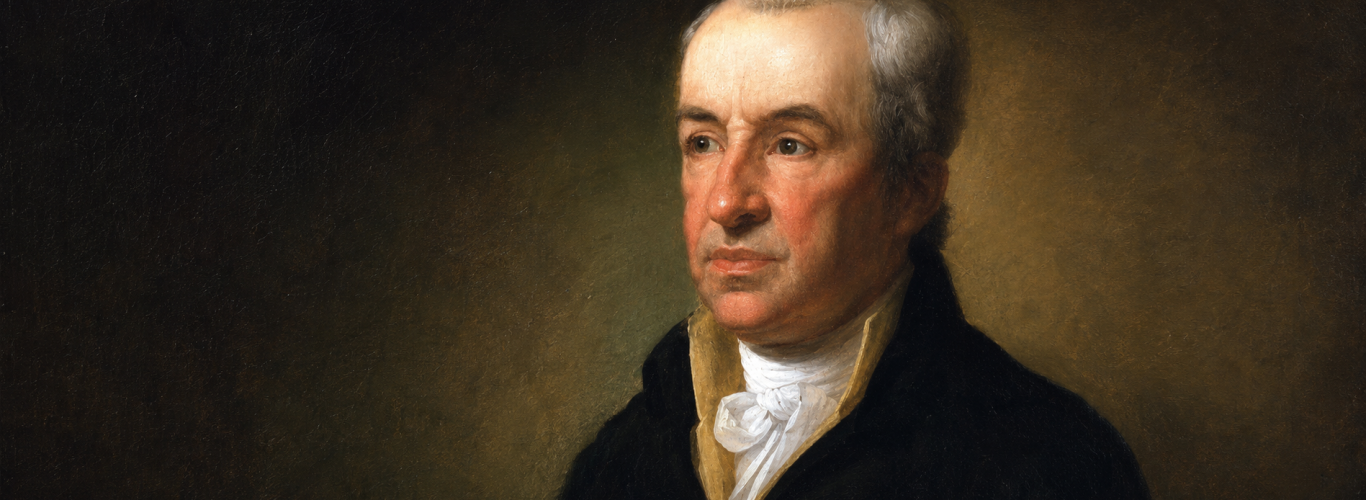
John Dunlap’s life illustrates the depth and complexity of that world. Born in Strabane in 1747, he sailed to Philadelphia at the age of ten, where he was apprenticed as a printer. He later rose to become printer to the Continental Congress and to fight alongside George Washington at Trenton and Princeton. Raised within a Presbyterian culture, shaped by Scotland and Ireland, Dunlap made his life and career in revolutionary America. To claim that he belonged to Northern Ireland is not simply anachronistic – he was born almost 180 years before Partition – but imposes modern identities upon a world that was far more fluid and interconnected.
Events taking place across the North and tributes like the Republic of Ireland’s commemorative stamp, rightly celebrate Dunlap’s role in Irish, British and American history. Yet, as many of the events themselves show, his story belongs to something larger than either modern Irish nationalism or Ulster unionism. In a lecture hosted by the Grand Orange Lodge as part of the America 250 programme, British Conservative peer, Daniel Hannan put forward the constitutional inheritance of 1688 as evidence of Britain’s contribution to the American Revolution. The Glorious Revolution established the principle that Kings rule under law rather than by divine right alone, while the English Bill of Rights affirmed parliamentary government and secured important civil liberties, including the right to trial by jury and freedom from arbitrary arrest. Hannan rightly points out that American independence did not emerge from an intellectual vacuum and that many of the colonists’ early grievances were framed as a defence of rights secured in 1688 rather than rejection of the British constitution. However, it is also true that the constitutional traditions of 1688 were themselves transformed as they crossed the Atlantic, encountering Scottish moral philosophy, Irish Presbyterian dissent, Enlightenment rationalism and the experience of colonial self-government. This great confluence of ideas and traditions did not end in the Glorious Revolution transplanted to America, but in the creation of an independent nation, founded on the more radical republican claim that sovereignty ultimately rested with the people themselves.
Dunlap belonged in this Revolutionary Atlantic world whose intellectual and political currents flowed between England, Ireland, Scotland, America and France. Indeed, as a republican from England, may I respectfully add one of my own countrymen to its pantheon of revolutionary heroes. Born in humble circumstances in the market town of Thetford, Norfolk, where he is still proudly remembered, Thomas Paine played a decisive role in both the American and French Revolutions. It was, as he put it, “living to some purpose to have had a share in two revolutions”. Paine’s bestselling Common Sense gave voice and inspiration to the American people in their struggle for independence and representative government. Fifteen years later, when Edmund Burke launched his attack on the French Revolution, Paine published his great vindication of democratic principles, The Rights of Man. Rejecting what he called “the romantic and barbarous distinction of men into Kings and subjects”, he insisted that every citizen was “a member of the Sovereignty, and, as such, can acknowledge no personal subjection, and his obedience can only be to the laws”. In the republican systems established in America and France, Paine believed, citizenship “operates to embrace the whole of a nation”.
The ideas that inspired Dunlap, Paine, Jefferson and their contemporaries drew from many sources. Flowing through universities, churches, emigrant communities, books and pamphlets, these included the republicanism and radical democracy of the English Commonwealth and the Putney Debates; thinkers such as James Harrington and John Milton, the constitutional theories of John Locke, the moral philosophy of Francis Hutcheson and the educational and religious networks of Presbyterians and other dissenters. The revolutionary generation ultimately inhabited an intellectual world shaped by radical enlightenment thinkers who challenged inherited authority and questioned the legitimacy of monarchy, aristocratic privilege and established churches. Together, they sought to free humanity from the grip of superstition and arbitrary power and to establish political institutions on rational foundations. Authority, they argued, should rest not upon divine right or tradition alone, but on reason and the consent of the governed. The same ideas that inspired the American Revolution shaped the French Revolution and later influenced the wonderful conjunction of Protestant dissent and Catholic radicalism that gave rise to the United Irishmen.
Appealing to a rising commercial and professional class seeking greater economic freedom and political influence, these ideals were inevitably littered with contradictions. The declaration that “all men are created equal” was proclaimed by societies that tolerated slavery and deep inequalities of wealth and power. The defence of liberty sat uneasily beside the defence of property, while the promise of equality collided with the realities of hierarchy and exclusion. Inspired by the French Revolution, the enslaved Africans of Saint-Domingue took a much clearer, more principled and courageous stand in pursuit of the Rights of Man than many supposedly enlightened Europeans. Under the leadership of Toussaint Louverture, the Haitian revolutionaries encountered fierce resistance from plantation owners and from French, Spanish and British forces determined to defend the economic order upon which slavery rested.
These tensions have remained enduring features of the modern democratic age. The history of the last two and a half centuries can be read as a continuing struggle over the meaning of the Declaration’s promises. The American Civil War was fought in part over the question of whether a republic founded on liberty and equality could continue to tolerate chattel slavery. A century later, the Civil Rights movement appealed to the same ideals in their struggle against segregation and disenfranchisement in the American South. Similar demands for freedom, equality and self-government inspired the Chartists, the suffragettes and the men and women who rose in Dublin in 1916. While the same cry for equal rights and representation echoed through the streets of Derry and Belfast in the 1960s.
Seen in this light, an argument over whether John Dunlap is Irish or Ulster-Scots, falls far short of his own radical aspiration to transcend inherited forms of authority and hierarchies of power. Some of the greatest legacies of the revolutionary era grew from the recognition that every society is open to transformation. If monarchies, empires, churches, classes and nations are historical creations rather than fixed expressions of nature, the same is true of identities, cultures and traditions. What appears permanent in one age dissolves in another. What is radical in one generation may ossify and act as a barrier to change in the next. History itself becomes the medium through which ideas acquire new meanings and forms.
Ireland illustrates the dynamic nature of history. The same dissenting Presbyterian tradition that inspired the United Irishmen also helped shape Ulster Unionism and Orangeism. By the early twentieth century, in a greatly changed political context, both these movements were defending rather than challenging established authority. Northern Ireland emerged, not from a democratic revolution, but from the successful resistance to the extension of parliamentary democracy in Britain and self-government in Ireland, driven by a powerful alliance of Tory landowners, industrial interests and British Conservatives. As I have argued in this publication, Northern Ireland’s creation represented not a culmination but a reaction against the democratic aspirations of the eighteenth century. History does not move in straight lines and the descendants of those who had struggled to unite “Protestant, Catholic and Dissenter” found themselves presiding over a “a Protestant Parliament for a Protestant people”.
In an age increasingly defined by competing identities and rival claims of ownership over the past, the question should not be which tribe owns Dunlap’s inheritance, but what we can do to live up to the courage and determination of previous generations who fought for many of the rights and freedoms we enjoy today. How might we rediscover the courage to defend those rights and assert that men and women can govern themselves, that citizenship can transcend inherited divisions, and societies can be made anew through reason, argument and political action? We can look for answers in the commemorative events marking John Dunlap’s extraordinary life and political career but let me give the last word to the great radical Tom Paine, who wrote in 1791 that “every age and generation must be as free to act for itself, in all cases, as the ages and generations which preceded it.”



John Dunlap and the politics of commemoration
By Pauline Hadaway
As the United States celebrates the 250th anniversary of its Declaration of Independence, Northern Ireland’s Ulster-Scots institutions have renewed a long-standing claim that Presbyterians of Ulster-Scots descent played a decisive role in founding the United States and shaping the Declaration. The Ulster-Scots Agency points to prominent American revolutionaries with Ulster family connections, including Thomas McKean, commander of the Pennsylvania Associators, Maghera-born Charles Thomson, secretary to the Continental Congress, and John Dunlap, the Strabane-born printer who produced the famous Dunlap broadsides that carried news of the Declaration to the American public.
These claims acquired fresh political significance earlier this year when Communities Minister Gordon Lyons awarded £426,000 to the America 250 funding scheme administered by the Ulster-Scots Agency. Meanwhile, Lyons’ DUP colleague Gregory Campbell MP fired a broadside of his own, accusing the Irish government of “misappropriation”. After An Post issued a commemorative stamp honouring Dunlap, Campbell objected to what he regarded as the Republic’s claim upon “this famous son of Strabane, an Ulster-Scot, a Presbyterian”.
Presbyterian traditions of dissent and individual liberty clearly made their mark on revolutionary thinking, while many brave Ulster Presbyterians played a prominent political and military role advancing the Patriot cause. Yet claims of ancestral ownership diminish the historical achievement of the Declaration itself, as a document which emerged from and belongs to a much wider intellectual and political world.
John Dunlap’s life illustrates the depth and complexity of that world. Born in Strabane in 1747, he sailed to Philadelphia at the age of ten, where he was apprenticed as a printer. He later rose to become printer to the Continental Congress and to fight alongside George Washington at Trenton and Princeton. Raised within a Presbyterian culture, shaped by Scotland and Ireland, Dunlap made his life and career in revolutionary America. To claim that he belonged to Northern Ireland is not simply anachronistic – he was born almost 180 years before Partition – but imposes modern identities upon a world that was far more fluid and interconnected.
Events taking place across the North and tributes like the Republic of Ireland’s commemorative stamp, rightly celebrate Dunlap’s role in Irish, British and American history. Yet, as many of the events themselves show, his story belongs to something larger than either modern Irish nationalism or Ulster unionism. In a lecture hosted by the Grand Orange Lodge as part of the America 250 programme, British Conservative peer, Daniel Hannan put forward the constitutional inheritance of 1688 as evidence of Britain’s contribution to the American Revolution. The Glorious Revolution established the principle that Kings rule under law rather than by divine right alone, while the English Bill of Rights affirmed parliamentary government and secured important civil liberties, including the right to trial by jury and freedom from arbitrary arrest. Hannan rightly points out that American independence did not emerge from an intellectual vacuum and that many of the colonists’ early grievances were framed as a defence of rights secured in 1688 rather than rejection of the British constitution. However, it is also true that the constitutional traditions of 1688 were themselves transformed as they crossed the Atlantic, encountering Scottish moral philosophy, Irish Presbyterian dissent, Enlightenment rationalism and the experience of colonial self-government. This great confluence of ideas and traditions did not end in the Glorious Revolution transplanted to America, but in the creation of an independent nation, founded on the more radical republican claim that sovereignty ultimately rested with the people themselves.
Dunlap belonged in this Revolutionary Atlantic world whose intellectual and political currents flowed between England, Ireland, Scotland, America and France. Indeed, as a republican from England, may I respectfully add one of my own countrymen to its pantheon of revolutionary heroes. Born in humble circumstances in the market town of Thetford, Norfolk, where he is still proudly remembered, Thomas Paine played a decisive role in both the American and French Revolutions. It was, as he put it, “living to some purpose to have had a share in two revolutions”. Paine’s bestselling Common Sense gave voice and inspiration to the American people in their struggle for independence and representative government. Fifteen years later, when Edmund Burke launched his attack on the French Revolution, Paine published his great vindication of democratic principles, The Rights of Man. Rejecting what he called “the romantic and barbarous distinction of men into Kings and subjects”, he insisted that every citizen was “a member of the Sovereignty, and, as such, can acknowledge no personal subjection, and his obedience can only be to the laws”. In the republican systems established in America and France, Paine believed, citizenship “operates to embrace the whole of a nation”.
The ideas that inspired Dunlap, Paine, Jefferson and their contemporaries drew from many sources. Flowing through universities, churches, emigrant communities, books and pamphlets, these included the republicanism and radical democracy of the English Commonwealth and the Putney Debates; thinkers such as James Harrington and John Milton, the constitutional theories of John Locke, the moral philosophy of Francis Hutcheson and the educational and religious networks of Presbyterians and other dissenters. The revolutionary generation ultimately inhabited an intellectual world shaped by radical enlightenment thinkers who challenged inherited authority and questioned the legitimacy of monarchy, aristocratic privilege and established churches. Together, they sought to free humanity from the grip of superstition and arbitrary power and to establish political institutions on rational foundations. Authority, they argued, should rest not upon divine right or tradition alone, but on reason and the consent of the governed. The same ideas that inspired the American Revolution shaped the French Revolution and later influenced the wonderful conjunction of Protestant dissent and Catholic radicalism that gave rise to the United Irishmen.
Appealing to a rising commercial and professional class seeking greater economic freedom and political influence, these ideals were inevitably littered with contradictions. The declaration that “all men are created equal” was proclaimed by societies that tolerated slavery and deep inequalities of wealth and power. The defence of liberty sat uneasily beside the defence of property, while the promise of equality collided with the realities of hierarchy and exclusion. Inspired by the French Revolution, the enslaved Africans of Saint-Domingue took a much clearer, more principled and courageous stand in pursuit of the Rights of Man than many supposedly enlightened Europeans. Under the leadership of Toussaint Louverture, the Haitian revolutionaries encountered fierce resistance from plantation owners and from French, Spanish and British forces determined to defend the economic order upon which slavery rested.
These tensions have remained enduring features of the modern democratic age. The history of the last two and a half centuries can be read as a continuing struggle over the meaning of the Declaration’s promises. The American Civil War was fought in part over the question of whether a republic founded on liberty and equality could continue to tolerate chattel slavery. A century later, the Civil Rights movement appealed to the same ideals in their struggle against segregation and disenfranchisement in the American South. Similar demands for freedom, equality and self-government inspired the Chartists, the suffragettes and the men and women who rose in Dublin in 1916. While the same cry for equal rights and representation echoed through the streets of Derry and Belfast in the 1960s.
Seen in this light, an argument over whether John Dunlap is Irish or Ulster-Scots, falls far short of his own radical aspiration to transcend inherited forms of authority and hierarchies of power. Some of the greatest legacies of the revolutionary era grew from the recognition that every society is open to transformation. If monarchies, empires, churches, classes and nations are historical creations rather than fixed expressions of nature, the same is true of identities, cultures and traditions. What appears permanent in one age dissolves in another. What is radical in one generation may ossify and act as a barrier to change in the next. History itself becomes the medium through which ideas acquire new meanings and forms.
Ireland illustrates the dynamic nature of history. The same dissenting Presbyterian tradition that inspired the United Irishmen also helped shape Ulster Unionism and Orangeism. By the early twentieth century, in a greatly changed political context, both these movements were defending rather than challenging established authority. Northern Ireland emerged, not from a democratic revolution, but from the successful resistance to the extension of parliamentary democracy in Britain and self-government in Ireland, driven by a powerful alliance of Tory landowners, industrial interests and British Conservatives. As I have argued in this publication, Northern Ireland’s creation represented not a culmination but a reaction against the democratic aspirations of the eighteenth century. History does not move in straight lines and the descendants of those who had struggled to unite “Protestant, Catholic and Dissenter” found themselves presiding over a “a Protestant Parliament for a Protestant people”.
In an age increasingly defined by competing identities and rival claims of ownership over the past, the question should not be which tribe owns Dunlap’s inheritance, but what we can do to live up to the courage and determination of previous generations who fought for many of the rights and freedoms we enjoy today. How might we rediscover the courage to defend those rights and assert that men and women can govern themselves, that citizenship can transcend inherited divisions, and societies can be made anew through reason, argument and political action? We can look for answers in the commemorative events marking John Dunlap’s extraordinary life and political career but let me give the last word to the great radical Tom Paine, who wrote in 1791 that “every age and generation must be as free to act for itself, in all cases, as the ages and generations which preceded it.”