by Ray Bassett
The current Government in Dublin has built its Northern policy around the Shared Island Initiative. It claims that its approach is anchored in the Good Friday Agreement (GFA). Certainly, on reading through that Agreement, it is difficult to understand how an entire Irish Government approach to the North could be based solely on this Initiative. There are lots of other parts to the GFA than North/South cooperation.
While very few would doubt the value of cross border projects, there is a timidness about this policy, which is unsettling. Even the name Shared Island seems to reflect a nervousness about using the name Ireland, although it is only the tiniest minority in the North that would have difficulty with using the title of a Shared Ireland. However, the current administration would be nervous about any implication, however tiny, that there were political implications to its policy.
There is a suspicion among many Nationalists/Republicans and others that the Shared Island Initiative is an excuse for doing nothing to promote the cause of Irish Unity, something that the political parties, which make up the current Government, have in their founding ideals. That suspicion was confirmed when the Minister for Public Expenditure and my local TD, Jack Chambers, made the bald statement that the Shared Island Initiative must not be used to promote Irish Unity, an extra-ordinary statement from an Irish Minister, involved in the expenditure of hundreds of millions of euros on the policy. His remarks are in stark contrast with those of Fine Gael’s Leo Varadkar, who described his own personal commitment to “the great cause of Irish Unity” and even called on Irish America to become actively involved in that cause.
The difficulty for the current Taoiseach is that on the North, just like John Bruton, he appears to have no level of support inside that jurisdiction, as he and his closest Minister, Jack Chambers, can be accused of sounding like members of the Democratic Unionist Party (DUP). Without any real support inside the North, this greatly lessens the influence of Dublin to that of a supplicant, merely seeking only to influence British policy there, through formal diplomatic channels.
Even Ulster Unionist figures seem more open to discussing Irish Unity than the leader of the “Republican Party”, Fianna Fáil. The leader of the SDLP, Claire Hanna, wisely stated last month, “Crucially, this is not a conversation that can be deferred to some future constitutional moment”. She is right, the time to move this forward is now.
If there is a change of administration at Westminster, and a new Farage/Badenock regime, then Dublin will be left without a rudder in the choppy seas of Northern politics. A more strident, right wing Westminster Government is unlikely to listen to Dublin’s pleadings. The GFA might not even survive a hostile Government in London. That would be a recipe for turbulent times in Belfast. The current Irish Government has nothing in place like the old Travellers’ system of contact and information work on the ground, which ran during the Reynolds, Ahern and Cowen administrations.
The Taoiseach needs to take into account that there are a lot more than hard line Unionists in Northern Ireland. Everybody born in the North, as with the rest of Ireland, has the entitlement to Irish citizenship but it is highly probable that the vast bulk of those who exercise that right, are from the Nationalist community. It was David Trimble who requested that only those who wanted Irish citizenship there, became citizens. It would not be forced on those opposed to it. The Irish Government has a duty to cater for its own citizens, yet it is willfully ignoring their concerns. That is a failure of Government.
In reality, there is huge disappointment and even anger within my friends in the SDLP at the Taoiseach’s attitude to Irish Unity. He never misses an opportunity to dismiss the section of the Good Friday Agreement which provides a mechanism to bring about that objective. He is constantly supported on this by the establishment leaning Irish Times. The SDLP was always close to the Irish Government but is now alienated by Martin’s embrace of anti-Nationalist elements.
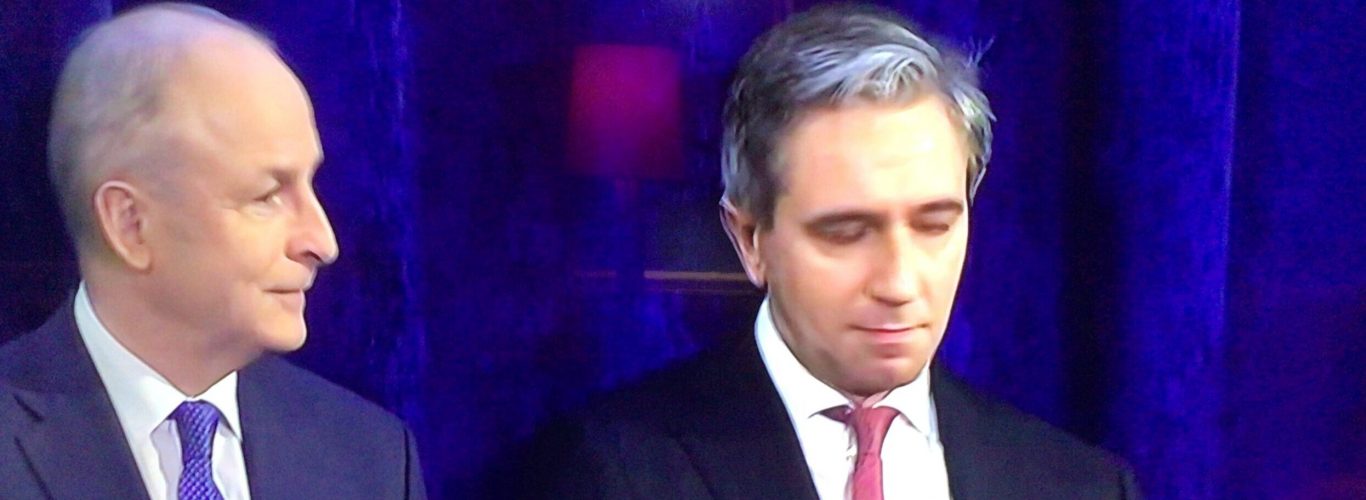
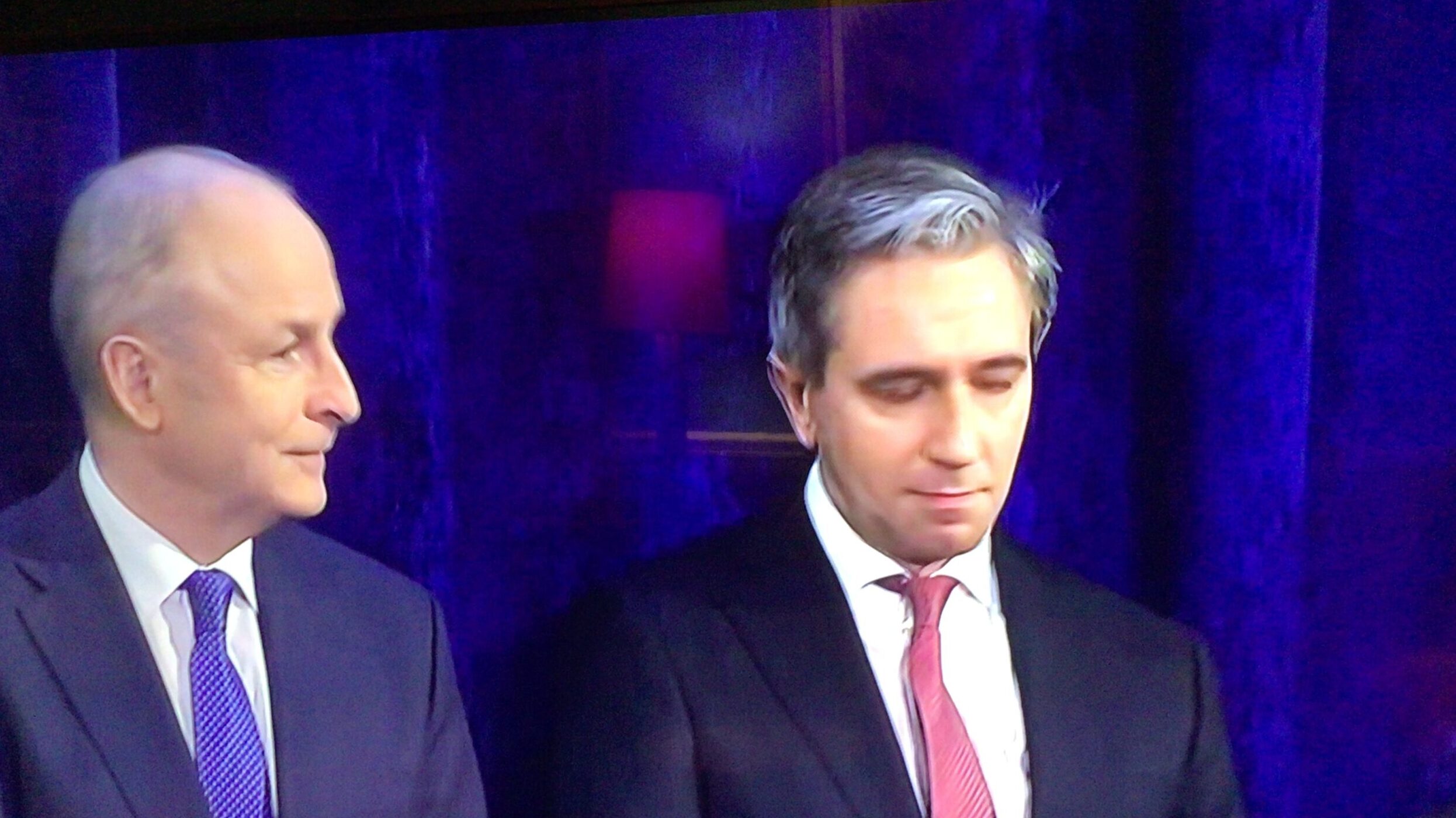
When the current Taoiseach steps down and is replaced by the leader of Fine Gael, Simon Harris, there is unlikely to be an improvement. Harris made the infamous remark that he was of a generation more familiar with Berlin than Belfast. That may be true for some in the privileged south Dublin suburbs where he resides in Greystones, but given the level of cross border activity, it is not backed up by the facts.
There are different political groupings within the North, a broad Nationalist constituency, a broad Unionist constituency and a growing section of the population which does not strongly identify with either group. For Micheál Martin to concentrate exclusively on the Unionist minority is wrong and strategically a major error. It is similar to the line John Bruton followed, which led to puzzlement among Unionists. As I described in my book The Traveller’s Tale, David Trimble said that Bruton was well meaning to Unionists but useless, since he had no idea of the role of an Irish Government in the North. Trimble was right and his description could be ascribed to Martin.
The question has to be asked as to how we arrived at a Fianna Fáil led administration being so hostile to Irish Unity. I have described the Taoiseach as having Sinn Féin derangement syndrome, but I fear that there may be a further complicating factor. There is also the very inconvenient fact that neither Fianna Fáil or Fine Gael have any members or support north of the border and re-unification would greatly jeopardize their prospects of continued domination of the Irish political scene. With a strongly declining support base inside the Republic, the addition of nearly 2m Northerners to the population would essentially finish their unbroken 100 years of a comfortable duopoly.
Therefore, the Taoiseach can appear to be active on the issue of the North through the Shared Island’s North South projects, in a manner similar to two friendly neighbouring states, but never to touch on the Constitutional issue. This despite the Constitutional imperative on the Irish Government to unify the people of Ireland, as outlined by the Supreme Court.
Therefore, I have to conclude that the Shared Island Initiative is being used as an excuse to avoid the prospect of a border poll.
by Ray Bassett
The current Government in Dublin has built its Northern policy around the Shared Island Initiative. It claims that its approach is anchored in the Good Friday Agreement (GFA). Certainly, on reading through that Agreement, it is difficult to understand how an entire Irish Government approach to the North could be based solely on this Initiative. There are lots of other parts to the GFA than North/South cooperation.
While very few would doubt the value of cross border projects, there is a timidness about this policy, which is unsettling. Even the name Shared Island seems to reflect a nervousness about using the name Ireland, although it is only the tiniest minority in the North that would have difficulty with using the title of a Shared Ireland. However, the current administration would be nervous about any implication, however tiny, that there were political implications to its policy.
There is a suspicion among many Nationalists/Republicans and others that the Shared Island Initiative is an excuse for doing nothing to promote the cause of Irish Unity, something that the political parties, which make up the current Government, have in their founding ideals. That suspicion was confirmed when the Minister for Public Expenditure and my local TD, Jack Chambers, made the bald statement that the Shared Island Initiative must not be used to promote Irish Unity, an extra-ordinary statement from an Irish Minister, involved in the expenditure of hundreds of millions of euros on the policy. His remarks are in stark contrast with those of Fine Gael’s Leo Varadkar, who described his own personal commitment to “the great cause of Irish Unity” and even called on Irish America to become actively involved in that cause.
The difficulty for the current Taoiseach is that on the North, just like John Bruton, he appears to have no level of support inside that jurisdiction, as he and his closest Minister, Jack Chambers, can be accused of sounding like members of the Democratic Unionist Party (DUP). Without any real support inside the North, this greatly lessens the influence of Dublin to that of a supplicant, merely seeking only to influence British policy there, through formal diplomatic channels.
Even Ulster Unionist figures seem more open to discussing Irish Unity than the leader of the “Republican Party”, Fianna Fáil. The leader of the SDLP, Claire Hanna, wisely stated last month, “Crucially, this is not a conversation that can be deferred to some future constitutional moment”. She is right, the time to move this forward is now.
If there is a change of administration at Westminster, and a new Farage/Badenock regime, then Dublin will be left without a rudder in the choppy seas of Northern politics. A more strident, right wing Westminster Government is unlikely to listen to Dublin’s pleadings. The GFA might not even survive a hostile Government in London. That would be a recipe for turbulent times in Belfast. The current Irish Government has nothing in place like the old Travellers’ system of contact and information work on the ground, which ran during the Reynolds, Ahern and Cowen administrations.
The Taoiseach needs to take into account that there are a lot more than hard line Unionists in Northern Ireland. Everybody born in the North, as with the rest of Ireland, has the entitlement to Irish citizenship but it is highly probable that the vast bulk of those who exercise that right, are from the Nationalist community. It was David Trimble who requested that only those who wanted Irish citizenship there, became citizens. It would not be forced on those opposed to it. The Irish Government has a duty to cater for its own citizens, yet it is willfully ignoring their concerns. That is a failure of Government.
In reality, there is huge disappointment and even anger within my friends in the SDLP at the Taoiseach’s attitude to Irish Unity. He never misses an opportunity to dismiss the section of the Good Friday Agreement which provides a mechanism to bring about that objective. He is constantly supported on this by the establishment leaning Irish Times. The SDLP was always close to the Irish Government but is now alienated by Martin’s embrace of anti-Nationalist elements.
When the current Taoiseach steps down and is replaced by the leader of Fine Gael, Simon Harris, there is unlikely to be an improvement. Harris made the infamous remark that he was of a generation more familiar with Berlin than Belfast. That may be true for some in the privileged south Dublin suburbs where he resides in Greystones, but given the level of cross border activity, it is not backed up by the facts.
There are different political groupings within the North, a broad Nationalist constituency, a broad Unionist constituency and a growing section of the population which does not strongly identify with either group. For Micheál Martin to concentrate exclusively on the Unionist minority is wrong and strategically a major error. It is similar to the line John Bruton followed, which led to puzzlement among Unionists. As I described in my book The Traveller’s Tale, David Trimble said that Bruton was well meaning to Unionists but useless, since he had no idea of the role of an Irish Government in the North. Trimble was right and his description could be ascribed to Martin.
The question has to be asked as to how we arrived at a Fianna Fáil led administration being so hostile to Irish Unity. I have described the Taoiseach as having Sinn Féin derangement syndrome, but I fear that there may be a further complicating factor. There is also the very inconvenient fact that neither Fianna Fáil or Fine Gael have any members or support north of the border and re-unification would greatly jeopardize their prospects of continued domination of the Irish political scene. With a strongly declining support base inside the Republic, the addition of nearly 2m Northerners to the population would essentially finish their unbroken 100 years of a comfortable duopoly.
Therefore, the Taoiseach can appear to be active on the issue of the North through the Shared Island’s North South projects, in a manner similar to two friendly neighbouring states, but never to touch on the Constitutional issue. This despite the Constitutional imperative on the Irish Government to unify the people of Ireland, as outlined by the Supreme Court.
Therefore, I have to conclude that the Shared Island Initiative is being used as an excuse to avoid the prospect of a border poll.