Scottish and Welsh Elections Could Set the Stage for Irish Border Poll
By Martin Burns
In theory, the May 8 elections in Scotland and Wales will determine only who will serve in their devolved parliaments. However, when you take a little bit of a deeper look into the matter, it is clear that the elections could signal something much deeper: the breakup of the United Kingdom and a vote on Irish unity.
Right now, the pro-independence party in Scotland (the Scottish National Party – SNP) and in Wales (Plaid Cymru) are in a very good position to take a majority. As a reminder, the biggest party in Northern Ireland is Sinn Fein which strongly supports a united Ireland. So, if the political winds continue to blow in their current direction, it means that three of the four nations that make up the so-called United Kingdom of Great Britain and Northern Ireland support leaving the union. This would be an unprecedented development.
An SNP victory next month will put the issue of a referendum front and centre of the British political agenda. The Labour government in Westminster will no doubt obfuscate and try and explain and point to the results of the 2014 in which the people of Scotland voted against independence. There is no legal requirement for the British government to call a vote on Scottish independence so we can anticipate that these stalling tactics will, at least in the short run, be successful.
The situation in Wales is different in Scotland as the pro-independence forces are not as well-organized. However, a government led by Plaid Cymru could change that. Significantly, there is a loophole that a Welsh government could use to call a referendum. Section 64 of the Welsh Government Act 2006 gives the government the power to hold a poll (referendum) “for the purpose of ascertaining the views of those polled about whether or how any of the functions of the Welsh Ministers…should be exercised.” While the overall provisions of the Welsh Government Act prevent the Welsh government from doing something that might alter the constitutional status of Wales, Section 64 is a loophole an aggressively nationalistic Welsh government could explore.
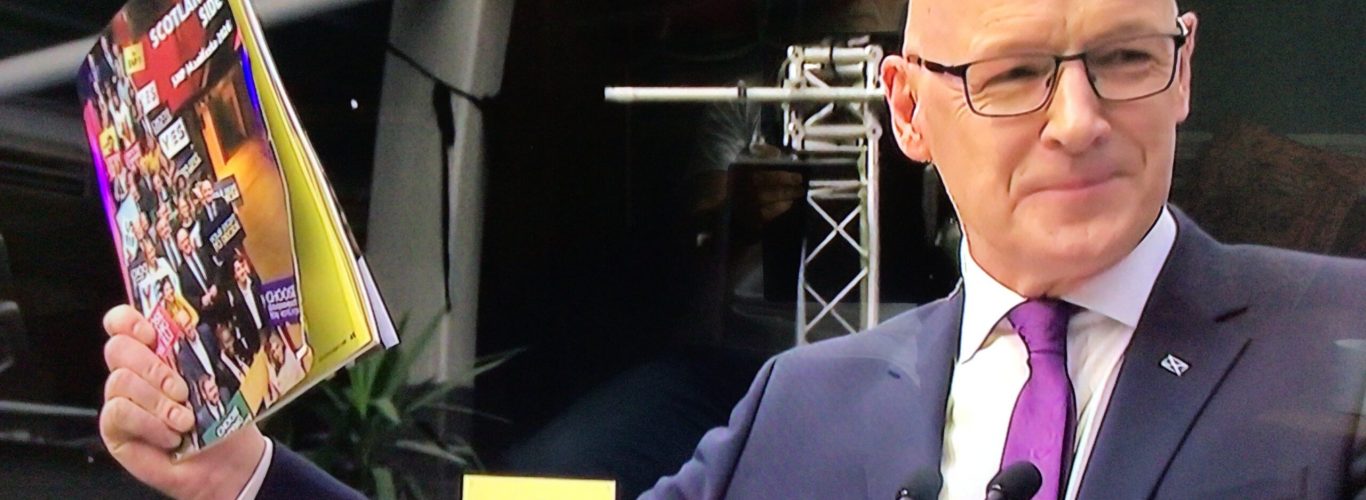
John Swinney the head of the SNP and the current first minister said this week that he would work with Sinn Fein and Plaid Cymru to “change the dynamics of the United Kingdom.” Having pro-independence governments in Northern Ireland, Scotland and Wales working together would be a political earthquake. In Ireland, it would change the political calculus and make it almost impossible for the British government to ignore its obligations under the Good Friday/Belfast Agreement to call a border poll.
The potential for pro-independence governments in Wales and Scotland, drives home the need to plan for Irish unity. The Irish government can no longer ignore the political developments taking place. A border poll is coming in the near future. Not planning for a united Ireland is not just ignoring politics. It is a disservice to the people of Ireland.


By Martin Burns
In theory, the May 8 elections in Scotland and Wales will determine only who will serve in their devolved parliaments. However, when you take a little bit of a deeper look into the matter, it is clear that the elections could signal something much deeper: the breakup of the United Kingdom and a vote on Irish unity.
Right now, the pro-independence party in Scotland (the Scottish National Party – SNP) and in Wales (Plaid Cymru) are in a very good position to take a majority. As a reminder, the biggest party in Northern Ireland is Sinn Fein which strongly supports a united Ireland. So, if the political winds continue to blow in their current direction, it means that three of the four nations that make up the so-called United Kingdom of Great Britain and Northern Ireland support leaving the union. This would be an unprecedented development.
An SNP victory next month will put the issue of a referendum front and centre of the British political agenda. The Labour government in Westminster will no doubt obfuscate and try and explain and point to the results of the 2014 in which the people of Scotland voted against independence. There is no legal requirement for the British government to call a vote on Scottish independence so we can anticipate that these stalling tactics will, at least in the short run, be successful.
The situation in Wales is different in Scotland as the pro-independence forces are not as well-organized. However, a government led by Plaid Cymru could change that. Significantly, there is a loophole that a Welsh government could use to call a referendum. Section 64 of the Welsh Government Act 2006 gives the government the power to hold a poll (referendum) “for the purpose of ascertaining the views of those polled about whether or how any of the functions of the Welsh Ministers…should be exercised.” While the overall provisions of the Welsh Government Act prevent the Welsh government from doing something that might alter the constitutional status of Wales, Section 64 is a loophole an aggressively nationalistic Welsh government could explore.
John Swinney the head of the SNP and the current first minister said this week that he would work with Sinn Fein and Plaid Cymru to “change the dynamics of the United Kingdom.” Having pro-independence governments in Northern Ireland, Scotland and Wales working together would be a political earthquake. In Ireland, it would change the political calculus and make it almost impossible for the British government to ignore its obligations under the Good Friday/Belfast Agreement to call a border poll.
The potential for pro-independence governments in Wales and Scotland, drives home the need to plan for Irish unity. The Irish government can no longer ignore the political developments taking place. A border poll is coming in the near future. Not planning for a united Ireland is not just ignoring politics. It is a disservice to the people of Ireland.