by Kevin Meagher
This time next year, we will be in the final run-in to the most important political event in Northern Irish politics since the Good Friday Agreement.
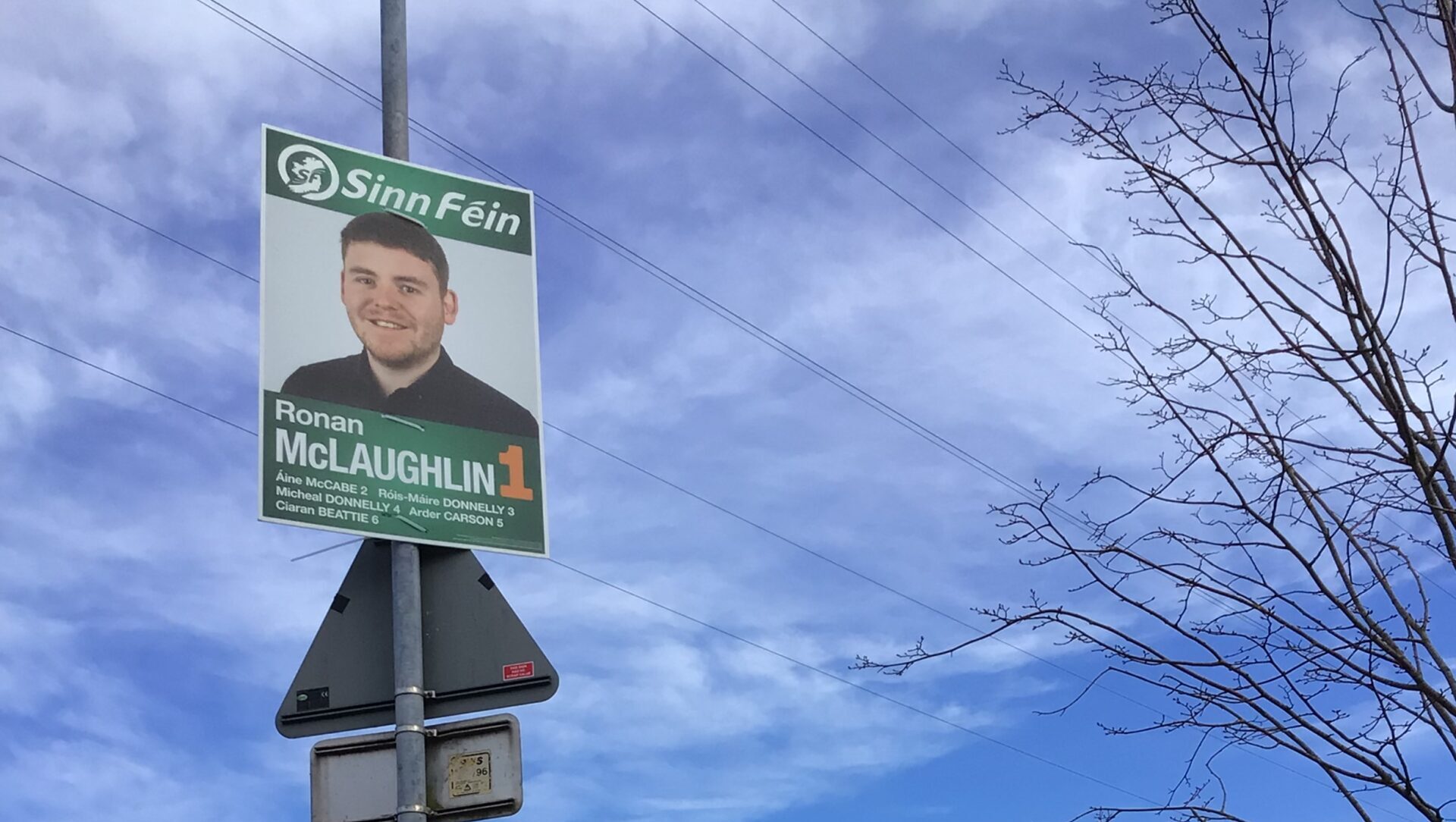
A scheduling quirk means assembly elections will be held on the same day as all-out local elections. And in response to unionist parliamentarians (here and here), British ministers have been clear they do not expect to separate out the elections, scheduled for Thursday 6 May 2027.
The result will see a ‘Super Thursday’ event – a democratic agglomeration – providing two opportunities to assess the state of the ‘constitutional question.’ The stakes are enormous. The door is either opened onto a border poll in the next few years or slammed firmly shut on one.
A quick recap.
In the last assembly elections back in 2022, the result was incredibly close – with the combined unionist (Pro-UK) share of the vote edging the nationalist (Pro-UI) camp by less than 1%. As Professors Brendan O’Leary, John Garry and Dr Jamie Pow put it in a paper they wrote assessing the result:
‘The gap between the top two blocs by party-candidates was 3,842 in favour of nationalists. In total, however, after coding and adding in the first-preference votes for independents, the unionist bloc had a net advantage of 6,416 votes (less than a percentage point). Unionist hegemony is over, the unionist plurality survives by a thread.’
Then the local elections in 2023 saw the advantage tilt towards United Irelanders for the first time. As O’Leary and Pow put it in a different paper, the result ‘merit[s] the slightly overused accolade of “historic.”’
The first-preference votes of pro-United Ireland parties and candidates ‘unambiguously outnumbered’ those who backed pro-union bloc – by 43.8 to 39.9% – resulting in a 44-40-16 outcome (Pro-UI/Pro-UK/Others).
If this margin is achieved next May – in what is surely seen as a proxy border poll – then that will see three straight elections where the Pro-UI side will have won more votes than the Pro-UK side. At which point, denying the validity of calling a border poll becomes an awful lot harder. Real votes in actual elections trump any number of opinion polls.
This, then, represents is the first of three inter-locking segments on the way to a border poll. The second is to see a pro-unity government in the south at the 2030 Irish general election. If that happens then the third element is the next British government (after the 2030 British election) discharging its legal responsibility to call a poll.
Too easy?
What if Sinn Fein became part of the next Irish government but Reform wins the British general election? Would Nigel Farage really sit down with Mary-Lou McDonald and agree to a border poll? Well, if Martin McGuinness and Ian Paisley could make political music together, anything is possible.
But the likelihood is that the British system will snap back into more familiar shape. Labour’s massive majority may take a knocking, but I would still expect to see them hold on past 2030. The question is whether Sinn Fein can sustain its lead and either work with a post-Martin Fianna Fail or combine with other centre-left parties to form a government.
The broader point is that the 2030-35 period is laden with opportunity. Not least because we see further elections for the assembly and local councils in 2032 and 2033 (and votes for 16-year-olds will be on the statute book by then, which will be advantageous for the Pro-UI camp).
What if those results saw an even larger margin for United Irelanders? That’s potentially five election wins in a row. Pretty conclusive, I would suggest. What’s clear is that Dublin and London are rapidly running out of road to kick this can down and they risk a legal challenge if they refuse to call a poll in the face of powerful electoral evidence that one is warranted.
In the short term, however – between now and next May – Sinn Fein, the SDLP and others need to work together to maximise the impact of the pro-UI vote. Sign-up voters to the electoral register. Agree tactics around transfers in key seats. This is now a numbers game, pure and simple. No more petty antagonisms and one-upmanship.
History is knocking on the door.
by Kevin Meagher
This time next year, we will be in the final run-in to the most important political event in Northern Irish politics since the Good Friday Agreement.
A scheduling quirk means assembly elections will be held on the same day as all-out local elections. And in response to unionist parliamentarians (here and here), British ministers have been clear they do not expect to separate out the elections, scheduled for Thursday 6 May 2027.
The result will see a ‘Super Thursday’ event – a democratic agglomeration – providing two opportunities to assess the state of the ‘constitutional question.’ The stakes are enormous. The door is either opened onto a border poll in the next few years or slammed firmly shut on one.
A quick recap.
In the last assembly elections back in 2022, the result was incredibly close – with the combined unionist (Pro-UK) share of the vote edging the nationalist (Pro-UI) camp by less than 1%. As Professors Brendan O’Leary, John Garry and Dr Jamie Pow put it in a paper they wrote assessing the result:
‘The gap between the top two blocs by party-candidates was 3,842 in favour of nationalists. In total, however, after coding and adding in the first-preference votes for independents, the unionist bloc had a net advantage of 6,416 votes (less than a percentage point). Unionist hegemony is over, the unionist plurality survives by a thread.’
Then the local elections in 2023 saw the advantage tilt towards United Irelanders for the first time. As O’Leary and Pow put it in a different paper, the result ‘merit[s] the slightly overused accolade of “historic.”’
The first-preference votes of pro-United Ireland parties and candidates ‘unambiguously outnumbered’ those who backed pro-union bloc – by 43.8 to 39.9% – resulting in a 44-40-16 outcome (Pro-UI/Pro-UK/Others).
If this margin is achieved next May – in what is surely seen as a proxy border poll – then that will see three straight elections where the Pro-UI side will have won more votes than the Pro-UK side. At which point, denying the validity of calling a border poll becomes an awful lot harder. Real votes in actual elections trump any number of opinion polls.
This, then, represents is the first of three inter-locking segments on the way to a border poll. The second is to see a pro-unity government in the south at the 2030 Irish general election. If that happens then the third element is the next British government (after the 2030 British election) discharging its legal responsibility to call a poll.
Too easy?
What if Sinn Fein became part of the next Irish government but Reform wins the British general election? Would Nigel Farage really sit down with Mary-Lou McDonald and agree to a border poll? Well, if Martin McGuinness and Ian Paisley could make political music together, anything is possible.
But the likelihood is that the British system will snap back into more familiar shape. Labour’s massive majority may take a knocking, but I would still expect to see them hold on past 2030. The question is whether Sinn Fein can sustain its lead and either work with a post-Martin Fianna Fail or combine with other centre-left parties to form a government.
The broader point is that the 2030-35 period is laden with opportunity. Not least because we see further elections for the assembly and local councils in 2032 and 2033 (and votes for 16-year-olds will be on the statute book by then, which will be advantageous for the Pro-UI camp).
What if those results saw an even larger margin for United Irelanders? That’s potentially five election wins in a row. Pretty conclusive, I would suggest. What’s clear is that Dublin and London are rapidly running out of road to kick this can down and they risk a legal challenge if they refuse to call a poll in the face of powerful electoral evidence that one is warranted.
In the short term, however – between now and next May – Sinn Fein, the SDLP and others need to work together to maximise the impact of the pro-UI vote. Sign-up voters to the electoral register. Agree tactics around transfers in key seats. This is now a numbers game, pure and simple. No more petty antagonisms and one-upmanship.
History is knocking on the door.